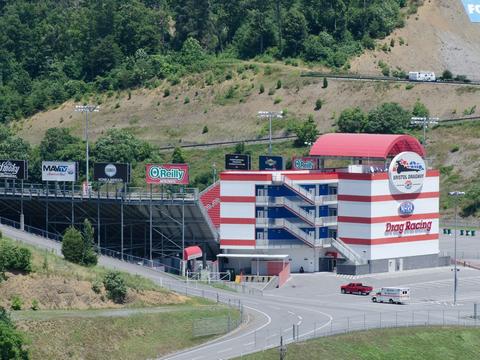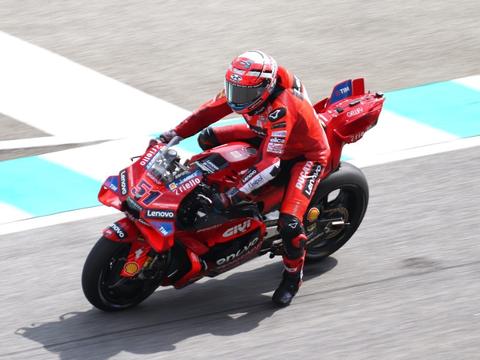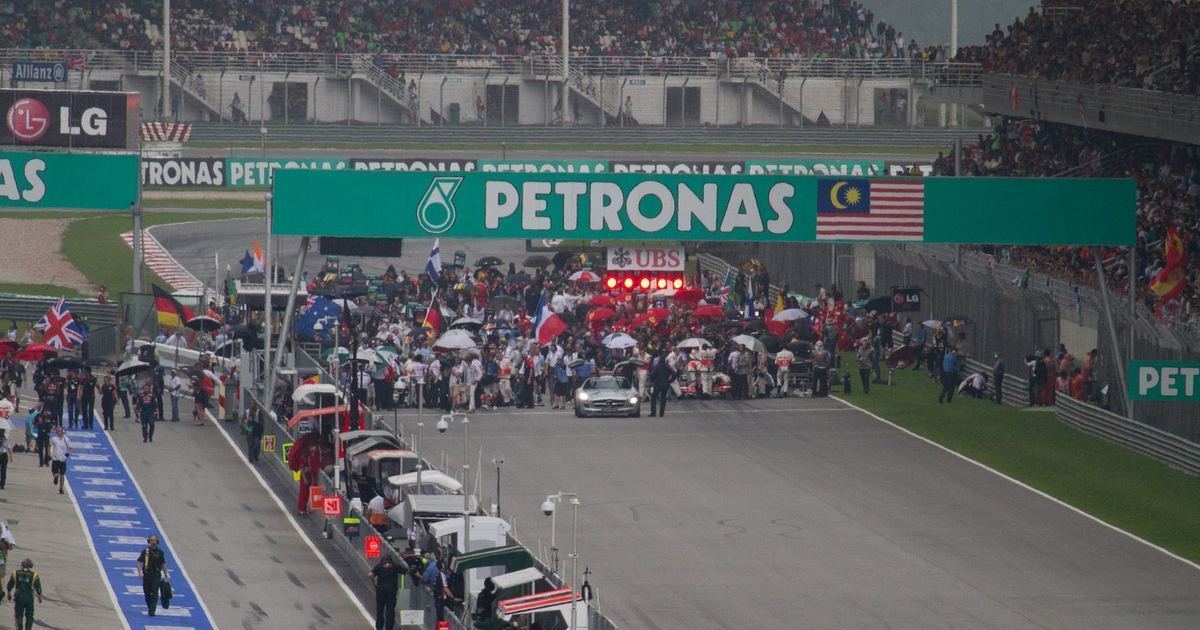
Two genuinely different motorsport philosophies
Formula 1 and NASCAR are often mentioned in the same breath as the world's biggest motorsports, but they are built on almost entirely different competitive premises. F1 prioritizes cutting-edge, actively adjustable aerodynamics and hybrid power on a constantly varying diet of road and street circuits. NASCAR prioritizes close, contact-tolerant stock car racing on a calendar still dominated by ovals, using a single standardized chassis platform shared across every manufacturer.
See our complete guide to Formula 1 and our complete guide to NASCAR for each series' own fundamentals before diving into how they actually compare.
The 2026 cars, side by side
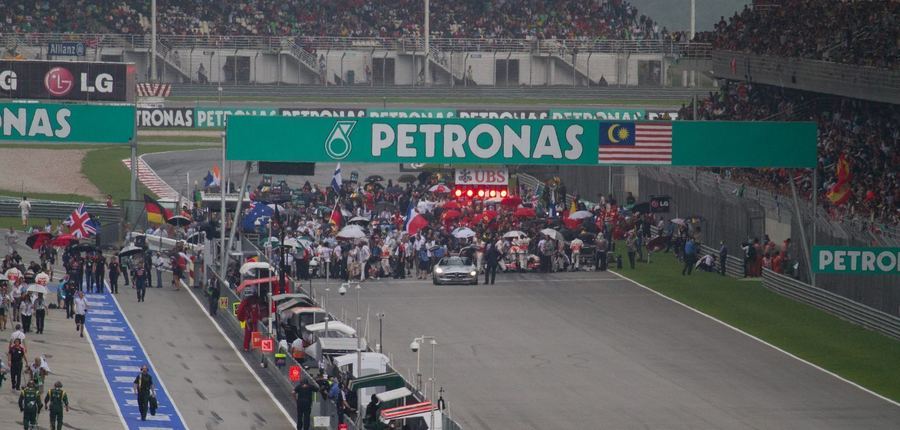
Both series enter 2026 with recently updated machinery — F1's is the biggest regulation reset in a generation, while NASCAR's Next Gen platform is now in its fifth season and running a stable, well-understood specification. Here is exactly how the two current cars compare.
| Spec | Formula 1 (2026) | NASCAR Next Gen (2026) |
|---|---|---|
| Minimum weight | 768 kg | 1,542 kg (with driver and fuel) |
| Power unit | Turbo-hybrid V6, roughly 50/50 combustion-to-electric split | 5.86-litre naturally aspirated V8 |
| Power output | ~1,000 hp combined | 670–750 hp (510 hp on the superspeedway package) |
| Top speed | 340–350+ km/h (211–217 mph) in low-drag mode | 190–195 mph (306–314 km/h) at restricted superspeedways |
| Peak cornering load | 4G+ lateral | Lower peak lateral G, offset by high banking at ovals |
| Aerodynamics | Active — driver/system-switched between high-downforce and low-drag modes mid-lap | Fixed for the event — a different physical package for superspeedways only |
| Chassis | Bespoke per constructor | Common spec chassis for every team |
The single biggest takeaway from this table: F1's car is barely half NASCAR's weight but produces roughly comparable power, which is the root of nearly every other performance difference between the two.
F1's 2026 reset vs NASCAR's Next Gen
F1's 2026 regulations represent the largest technical reset the sport has made in a generation. Minimum weight drops to 768kg, a 30kg reduction. Downforce falls by roughly 30% compared with the 2022–2025 generation, following the removal of the deep venturi-tunnel floor in favor of a flatter floor. Drag falls even further, by around 55%, specifically to let the new active-aero system produce genuinely different characters in different parts of a lap rather than one fixed aerodynamic compromise for the whole circuit.
NASCAR's Next Gen car, introduced in 2022 and still the current specification for 2026, takes the opposite technical philosophy: a single, common spec chassis raced by every team, with manufacturers — Chevrolet, Ford and Toyota — differentiating themselves through engine and bodywork styling rather than a fundamentally different platform. Its 5.86-litre naturally aspirated V8 produces between 670 and 750 horsepower depending on the track package, a genuinely simpler powertrain than F1's turbo-hybrid unit, built for durability and consistency across a much heavier, more contact-tolerant car.
How Each Car Adapts to the Track
F1 changes its aerodynamics within a single lap. NASCAR changes its car between events. Switch each side below and watch the real numbers move.
Both systems solve the same problem — matching the car to the track — but F1 does it dynamically, mid-lap, with the driver or car choosing the mode corner by corner. NASCAR pre-sets a physically different spoiler and horsepower package before the race weekend even starts, and it stays that way for the whole event.
The circuits: road courses vs. ovals
Formula 1's calendar is dominated by permanent road courses and temporary street circuits featuring a wide variety of corner types, elevation changes and surface conditions, testing a car's all-round handling balance across a single lap that might demand both a tight hairpin and a flat-out straight. NASCAR's Cup Series schedule, by contrast, is built primarily around oval tracks ranging from short half-mile bullrings to high-speed superspeedways, with a smaller number of road course events mixed into the modern calendar — a genuine but still secondary part of the season.

Which is actually faster?
On paper the top-speed gap looks smaller than most fans expect: NASCAR's restricted superspeedway package tops out around 190–195mph (306–314km/h) at Daytona and Talladega, while F1's low-drag straight-line configuration clears 340km/h and beyond — Mercedes recorded 347km/h through the speed traps during 2026 pre-season testing at Barcelona. That is a real but not enormous percentage gap in a straight line.
Where the comparison stops being close is cornering. F1 cars pull 4G or more of lateral load through fast corners and over 3G under braking, generated by genuine aerodynamic downforce a stock car's shape simply cannot produce to the same degree. A NASCAR car's competitive cornering speed on an oval comes largely from the track's own banking doing the work that F1's wings do aerodynamically — take a NASCAR car onto a flat road course corner and the gap to an F1 car through that same corner becomes enormous. That cornering difference, not top speed, is where the bulk of F1's overall lap-time advantage actually comes from.
How the points systems differ
Formula 1 awards points to the top ten finishers in every race on a fixed scale — 25 for the win down to 1 for tenth — with the driver accumulating the most points across the full season crowned champion. It is a straightforward full-season points race with no elimination stages.
NASCAR uses a considerably more layered system: stage points awarded partway through each race, a 26-race regular season, then a 16-driver, three-round elimination playoff across the final ten races that cuts the field to 12, then 8, then 4, before a winner-take-all finale among the survivors. It is explained in full in our NASCAR guide.
Race weekend formats compared
An F1 weekend typically runs a single race of a fixed distance, roughly 305 kilometers, adjusted downward for some street circuits, preceded by three practice sessions and a three-part knockout qualifying format that sets the grid. A NASCAR Cup Series weekend often runs considerably longer races by both distance and time, and some events run entirely under stage-based segments that award bonus points at fixed points partway through — an extra competitive layer F1's single-segment race format does not have at all.
Do the driving skills actually transfer?
A small number of drivers have attempted a genuine crossover between the two disciplines, and the results are instructive. Juan Pablo Montoya, a race winner in F1 with Williams and McLaren, left F1 at the end of 2006 and moved to NASCAR full-time from 2007 with Chip Ganassi Racing, building a real, multi-year Cup Series career rather than a one-off publicity stunt. Kimi Räikkönen, Montoya's former McLaren teammate and a Formula 1 world champion, later attempted his own NASCAR outings as well — both examples of the kind of adaptation period that even elite single-seater drivers need before an oval-heavy, contact-tolerant discipline starts to feel natural.
The skills involved genuinely do not map directly onto each other: precise, high-downforce cornering technique built around a lightweight, aero-dependent car for F1, versus close-quarters drafting, banking management and contact-tolerant racecraft in a car nearly twice the weight for NASCAR. Drivers who have attempted meaningful crossovers generally describe exactly this — a substantial adaptation period even at a genuinely elite individual skill level, in both directions.
How each series' global reach differs
Formula 1 races across roughly two dozen countries on five continents in a typical season, built deliberately as a global spectacle with a strong following well beyond any single home market. NASCAR's Cup Series, by contrast, remains overwhelmingly US-focused, with almost its entire schedule run domestically and a fan base concentrated primarily within North America, even as the series has made periodic efforts to grow international viewership.
How team and manufacturer involvement differs
Formula 1 teams each design and build their own complete chassis, competing as much on engineering originality as on-track results — this is why F1 constructors are named separately from their engine suppliers, and why a strong chassis design department can be worth more than a strong engine in a given season. NASCAR's standardized Next Gen car means manufacturers compete primarily on engine and badge rather than fundamentally different chassis designs, concentrating competition more heavily on driver skill, team strategy and setup within a shared platform than on unique aerodynamic or structural engineering.
Which one should a new fan start with?
Neither discipline is objectively "better" for a new fan. F1 tends to appeal to viewers drawn to technology, strategy and a genuinely global calendar, while NASCAR tends to appeal to fans who enjoy close, contact-heavy racing and a more predictable, US-centric season structure with a clear playoff narrative building toward one finale. Many fans of one discipline find they genuinely enjoy the other once they understand its different competitive logic on its own terms, rather than judging it against the other sport's own standards.
Frequently asked questions
Is an F1 car faster than a NASCAR car?
In a straight line the gap is real but not huge — F1's low-drag mode clears 340km/h and beyond against NASCAR's restricted 190–195mph at superspeedways. F1's real advantage comes through corners, where 4G+ of aerodynamic downforce puts it far ahead of a stock car on anything but a heavily banked oval.
How much does an F1 car weigh compared to a NASCAR car?
F1's 2026 minimum weight is 768kg. NASCAR's Next Gen car weighs 1,542kg with driver and fuel — roughly double, which is the root cause of most of the performance gap between the two.
What changed in F1 for 2026?
The biggest regulation reset in a generation: minimum weight fell to 768kg, downforce fell about 30% with the venturi floor removed, drag fell around 55%, and cars gained active aerodynamics that switch between a high-downforce cornering mode and a low-drag straight-line mode within a single lap.
How much horsepower does a NASCAR Next Gen car have?
Between 670 and 750 horsepower at most tracks, dropping to 510 horsepower under the restricted superspeedway package used only at Daytona, Talladega and Atlanta to keep pack racing manageable.
Does F1 still use DRS?
For 2026, the standalone rear-wing DRS system is replaced by a broader active-aero system with an Overtake Mode, part of the same Z-mode/X-mode setup that already governs the car's cornering and straight-line aerodynamics.
What is NASCAR's superspeedway package?
A physically different aero setup — including a taller, 7-inch rear spoiler — combined with a reduced 510-horsepower engine package, used only at Daytona, Talladega and the reconfigured Atlanta to keep speeds and pack racing at a manageable level.
Have any drivers competed successfully in both F1 and NASCAR?
Juan Pablo Montoya moved from F1 to a genuine multi-year NASCAR Cup career starting in 2007 with Chip Ganassi Racing. His former McLaren teammate Kimi Räikkönen later attempted NASCAR outings as well, though true sustained success in both remains rare.
How do the points systems differ between F1 and NASCAR?
F1 uses a straightforward full-season points race, 25 points for a win down to 1 for tenth, with no elimination rounds. NASCAR uses stage points within each race plus a 16-driver, three-round playoff bracket that narrows to a four-driver, winner-take-all finale.
Does F1 race on ovals like NASCAR?
No. F1's calendar is entirely road courses and street circuits with varied corners and elevation change. NASCAR's Cup Series schedule is built primarily around oval tracks, with a smaller number of road course events.
Why are NASCAR cars so much heavier than F1 cars?
NASCAR's Next Gen platform is built for durability and contact tolerance in close, physical racing rather than minimum weight, while F1's entire design philosophy is built around minimizing mass to maximize what its aerodynamics and hybrid power can achieve.
Is NASCAR as globally popular as F1?
No. F1 races across roughly two dozen countries on five continents as a deliberately global series, while NASCAR's Cup Series schedule remains overwhelmingly concentrated within the United States.
Which is better for a new motorsport fan, F1 or NASCAR?
Neither is objectively better — F1 suits fans drawn to technology, strategy and a global calendar, while NASCAR suits fans who enjoy close, contact-heavy oval racing building toward a single playoff finale.

Pippa has followed open-wheel racing for 12 years, from Formula 1's turbo-hybrid era to IndyCar's short ovals, and has watched competitive sim racing grow from a niche hobby into a genuine motorsport discipline in its own right. She covers circuit and open-wheel racing, touring cars and esports for CNMOTOS.
View all articles by Pippa Cook →