Why ranking F1 drivers across eras is genuinely hard
Comparing a driver from the 1950s to one racing today runs into an obvious problem: the cars, the calendars, the safety standards and even the number of serious rivals on the grid have all changed enormously. A driver who won five titles in an era with a dozen credible races and a handful of factory teams faced a different competitive landscape than one racing 24 rounds against a fully professionalized paddock. That's why any "greatest ever" conversation in F1 is really several separate arguments happening at once — most championships, most wins, most poles, and the far more subjective question of who was simply the fastest relative to their own equipment.
For the fundamentals of how F1's points and championship system actually work, see our complete guide to Formula 1 before diving into this comparison.
The record holders: championships and wins
By the two simplest counting stats, the picture is clear even if the interpretation isn't: Michael Schumacher and Lewis Hamilton share the record for most drivers' championships at seven each, while Hamilton holds the outright record for most race wins. Juan Manuel Fangio's five titles, won across the 1950s in just a fraction of the races per season that modern drivers get, represent arguably the highest win-rate relative to starts of anyone in the sport's history.
Juan Manuel Fangio: the original benchmark
Fangio won five World Championships between 1951 and 1957, driving for four different manufacturers along the way — Alfa Romeo, Ferrari, Mercedes-Benz and Maserati — a level of adaptability across genuinely different machinery that few subsequent champions have had to demonstrate. His 1957 German Grand Prix drive, where he fought back from a slow pit stop to retake the lead in the closing laps at the Nürburgring, is still cited by historians as one of the greatest single performances in the sport's history.
Ayrton Senna: raw speed and Q3 mythology
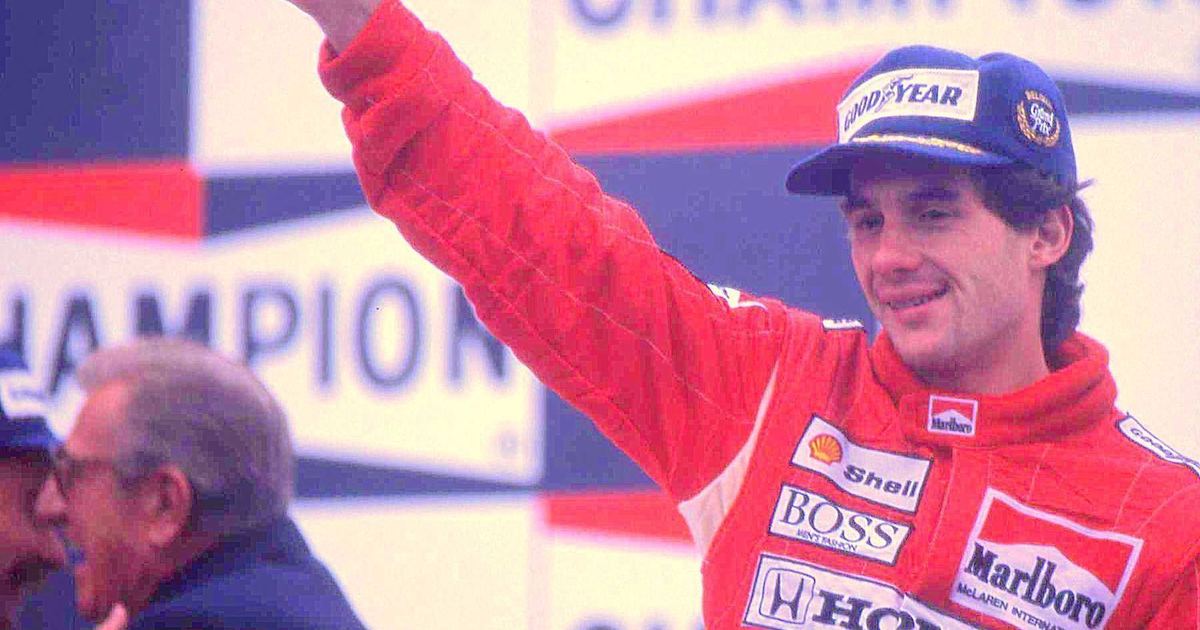
Senna won three World Championships (1988, 1990, 1991) and built a reputation for single-lap speed that many contemporaries and successors have called simply unmatched, particularly around Monaco, where he won six times. His rivalry with McLaren teammate Alain Prost defined the sport's competitive intensity through the late 1980s and became one of Formula 1's most enduring storylines, discussed in more detail in our feature on F1's most iconic rivalries.
Michael Schumacher: the sport's first true professional era
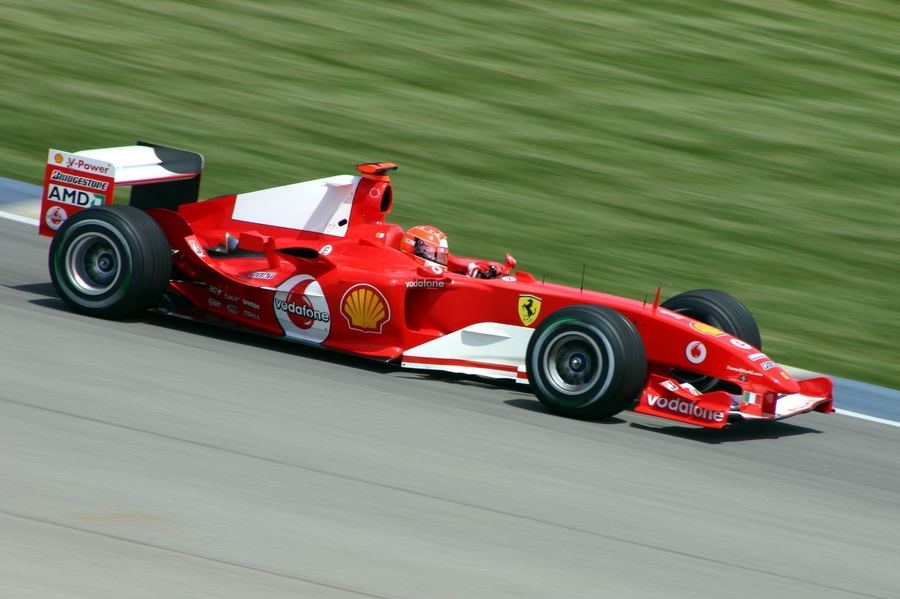
Schumacher's seven titles, five of them consecutive with Ferrari between 2000 and 2004, coincided with a shift toward far more systematic, data-driven preparation across fitness, simulator work and team strategy — arguably making him as much a product of professionalizing the sport as a beneficiary of it. His partnership with Ferrari technical director Ross Brawn is often credited with building the modern template for how a title-winning team operates.
Lewis Hamilton: the modern win-count king
Hamilton's seven championships, shared with Schumacher, come alongside the outright record for career wins, poles and podiums, built across a Formula 1 era with a substantially longer calendar than any of his predecessors competed on. That longer season format means direct win-total comparisons across eras need real context — but Hamilton's sustained level across more than a decade of front-running competition remains a genuinely distinct achievement.
Max Verstappen: dominance under a new technical era
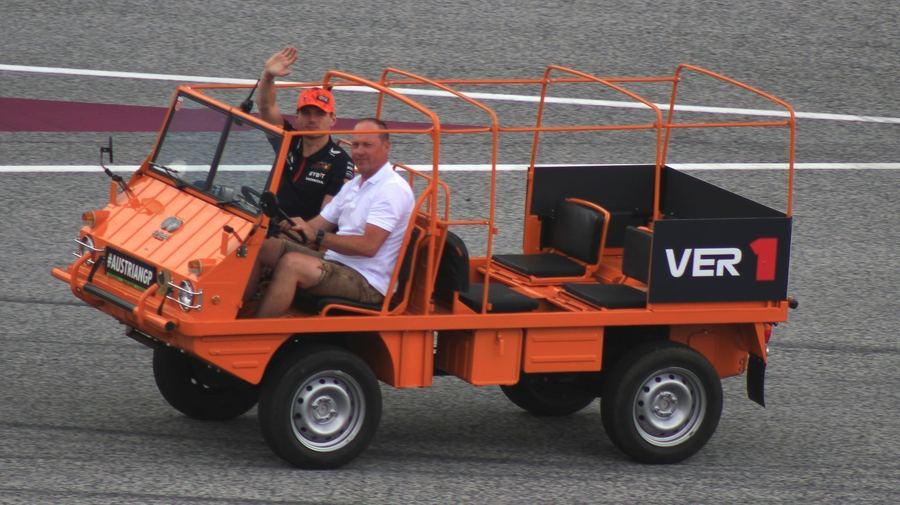
Verstappen's championship run has come under Formula 1's current ground-effect technical regulations, introduced in 2022, adding him to the conversation as a driver who has dominated a genuinely different competitive era from Schumacher or Hamilton's title-winning seasons. Whether his career total eventually rivals the sport's most decorated champions remains an open question that will play out over the coming seasons.
How fans and pundits actually compare eras
Most serious comparisons weigh a driver's results against their equipment — how often they out-qualified and out-raced a teammate in the same car, how they performed in genuinely competitive machinery versus a dominant one, and how they handled adversity like reliability failures or a mid-career team change. By that lens, the "greatest ever" conversation usually narrows to the handful of drivers above, with the actual ranking among them coming down to which specific criterion a given fan or pundit weighs most heavily.
Why teammate comparisons matter so much
Since every driver on the grid races a car built by their own team, the fairest apples-to-apples measure of speed is usually how a driver performed against their own teammate in identical machinery, rather than against the field as a whole. That's part of why statistics like qualifying head-to-head records and points splits between teammates carry so much weight in historical arguments — they strip out the car itself as a variable, leaving a comparison that's actually about the two people driving it.
Where raw statistics can actually mislead
A longer modern calendar means today's drivers accumulate wins, poles and points totals that simply weren't available to drivers competing on a shorter 1950s or 1960s season, making direct total comparisons across eras potentially misleading without adjusting for how many races were actually run. Win percentage, championship-to-season ratios, and head-to-head teammate records tend to age better as comparison tools than raw counting statistics that inherently favor whoever raced in the longest, most modern calendars.
Frequently asked questions
Who has won the most Formula 1 World Championships?
Michael Schumacher and Lewis Hamilton are tied for the most titles, with seven each.
Who has the most Formula 1 race wins?
Lewis Hamilton holds the outright record for career race wins, built across a longer modern F1 calendar than earlier champions competed on.
Why is Juan Manuel Fangio still considered among the greatest?
Fangio won five titles between 1951 and 1957 across four different manufacturers, a level of adaptability across genuinely different machinery that few later champions matched.
Why is Ayrton Senna so highly rated despite winning fewer titles?
Senna won three championships but built a reputation for single-lap qualifying speed widely considered unmatched, along with six wins at Monaco, seen as the sport's most demanding circuit.
Is it fair to compare drivers from different F1 eras directly?
Not directly — calendar length, car reliability, safety standards and the depth of competitive rivals have all changed significantly, so most serious comparisons weigh results against a driver's own equipment and teammates rather than raw win totals.
Does Max Verstappen belong in the greatest-of-all-time conversation?
He's increasingly part of it, having dominated Formula 1's current ground-effect regulations era since 2022, though where his career ultimately ranks depends on how the rest of his career unfolds.
Why do teammate comparisons matter more than field-wide statistics?
Since every driver races a car built by their own team, comparing performance against a teammate in identical machinery strips out the car as a variable, leaving a fairer measure of the drivers themselves.

Pippa has followed open-wheel racing for 12 years, from Formula 1's turbo-hybrid era to IndyCar's short ovals, and has watched competitive sim racing grow from a niche hobby into a genuine motorsport discipline in its own right. She covers circuit and open-wheel racing, touring cars and esports for CNMOTOS.
View all articles by Pippa Cook →