A Television Broadcasting Origin
Rallycross traces its origins to Britain in the late 1960s, born partly out of a practical broadcasting problem: a planned rally event was disrupted by weather, and organizers needed a format that could be reliably staged and filmed on a compact, controllable circuit rather than across an unpredictable point-to-point rally route.
The solution — mixing tarmac and loose surface sections on a short, purpose-built circuit with multiple cars racing together rather than against the clock individually — proved to have real appeal in its own right, separate from the broadcasting convenience that originally created it.
Early Growth Across Europe
Following its British origins, rallycross spread across continental Europe through the 1970s and beyond, with national championships developing in multiple countries and a European-level championship eventually forming to bring the strongest competitors together.
Throughout this period, the cars used were closely related to contemporary rally machinery, reflecting the discipline's origins as an offshoot of rallying rather than a wholly separate branch of motorsport.
The FIA World Rallycross Championship
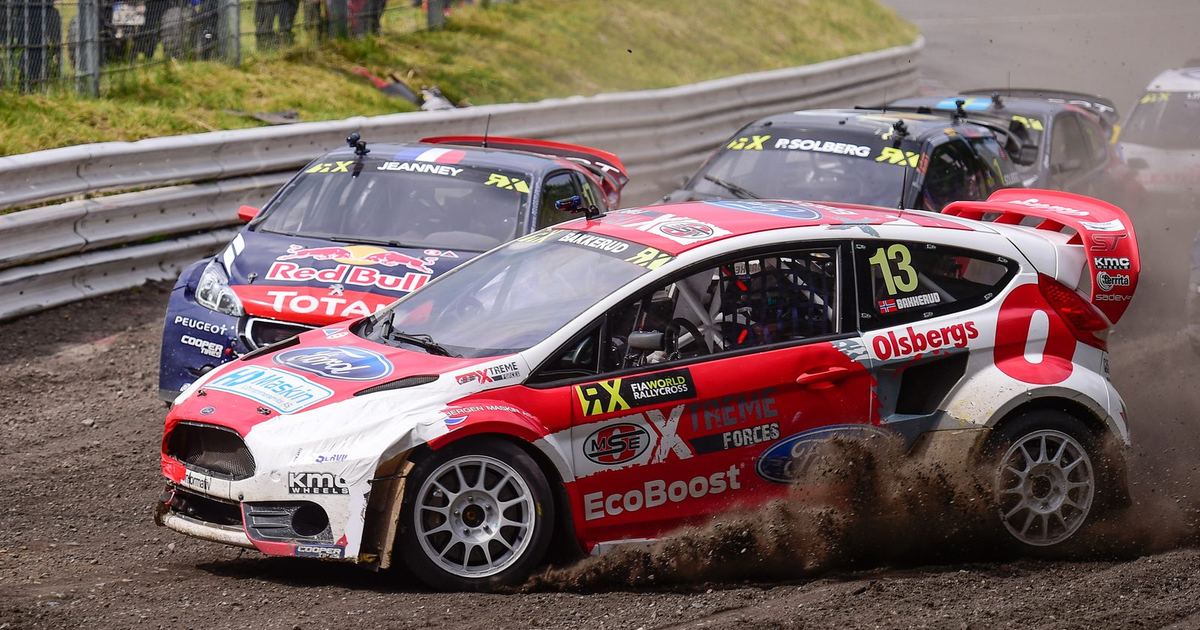
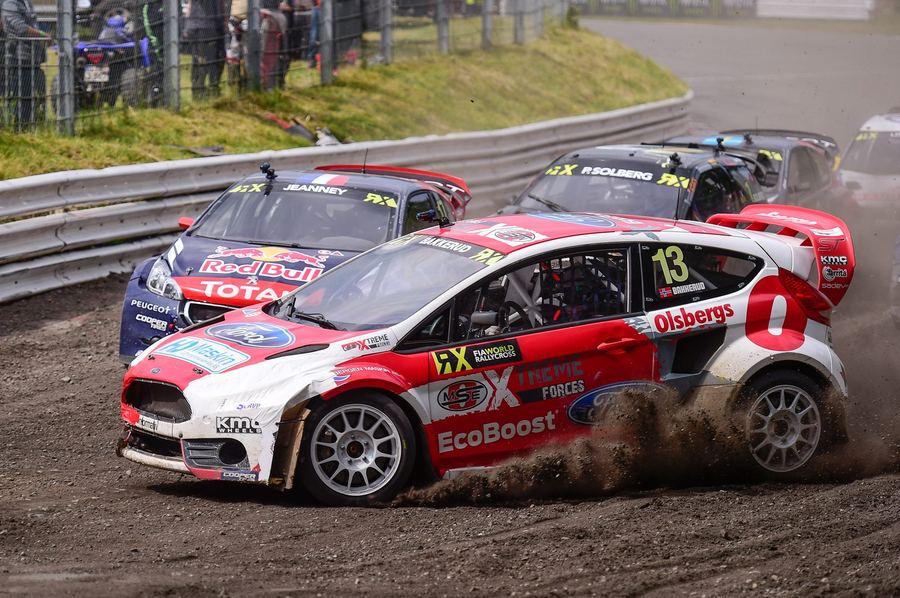
The FIA established the World Rallycross Championship in 2014, elevating the sport's top level to full world championship status and bringing greater manufacturer involvement, professional team structures and global broadcast reach than the earlier national and European championships had achieved individually.
This period also saw rallycross cars diverge more clearly from rally cars in outright specification, with extremely powerful, purpose-built Supercar-spec machinery emerging as its own distinct category of competition car.
The full timeline, year by year
Put the whole story together and it runs from a 1960s broadcasting fix to a 2026 restructuring that reshaped the sport's entire top level, in six clear steps.
Rallycross's History, Year by Year
From a rained-off British rally to a 2026 restructuring that reshaped the whole sport, in six verified steps. Press play, or click any point.
The Electric Experiment — and Its Reversal
World RX introduced the Kreisel-built RX1e electric class in 2022, part of a broader motorsport push toward electrification — the sport's short, contained race format made it a genuinely plausible testbed. From 2024, combustion-powered cars were reintroduced to race directly alongside the electric machines in a "battle of technologies" format.
That experiment did not survive the sport's 2026 restructuring: electric powertrains have been dropped entirely from the top level, and the European Rallycross Championship's Euro RX1 class runs internal combustion only. It's a rare, honest example of a motorsport electrification push being tried seriously and then reversed rather than simply expanded.
Why the Top Tier Changed for 2026
By its final seasons, World RX faced shrinking entry lists as the cost of competing with a Supercar-spec machine at world-championship level rose faster than the series' commercial revenue and manufacturer interest could sustain. The FIA announced the reversion just days before the 2025 season finale — the last-ever World RX round was contested with competitors already aware it was the format's final edition.
In its place, the European Rallycross Championship resumed its pre-2014 role as the sport's top continental series, while a new standalone FIA Rallycross World Cup gives the sport a global showcase — starting in Jakarta, Indonesia in December 2026 — without the year-round cost of a full world championship calendar. The FIA has tied a genuine World Rallycross Championship's return to 2028, timed to new technical regulations shared with the WRC.
Why the Format Has Endured
Rallycross's basic appeal — short, intense, easily broadcast races with constant multi-car contact and a genuinely unpredictable outcome — has proven durable across more than five decades since its accidental broadcasting-driven origin, surviving even a top-tier restructuring that most disciplines would treat as an existential crisis.
That same made-for-television compactness which originally created the sport remains one of its biggest advantages today, in an era where attention spans and broadcast formats increasingly favor shorter, more concentrated racing action over longer traditional formats. See our rallycross glossary for exactly what changed in the sport's terminology for 2026.
Frequently asked questions
How did rallycross start?
In Britain in the late 1960s, partly as a response to a planned rally event being disrupted by weather. Organizers needed a format that could be reliably staged and broadcast on a compact circuit rather than an unpredictable point-to-point route.
Is rallycross related to rallying?
Yes, historically. Rallycross grew out of rallying as an offshoot, and early rallycross cars were closely related to contemporary rally machinery, though the two disciplines have diverged significantly since.
When did rallycross become a world championship?
2014, when the FIA established the World Rallycross Championship, elevating the sport's top level to full world championship status with greater manufacturer involvement and global reach than earlier national championships.
Is World Rallycross still running?
Not currently. After 12 seasons (2014-2025), World RX reverted to European Rallycross Championship status for 2026, with a genuine World Rallycross Championship planned to return in 2028 alongside new technical regulations shared with the WRC.
Does rallycross still use electric cars?
No, not at the top level. The RX1e electric class, introduced in 2022, was dropped entirely for 2026 — the European Rallycross Championship's Euro RX1 class runs internal combustion only.
What is the FIA Rallycross World Cup?
A standalone, non-championship event launching in Jakarta, Indonesia in December 2026, giving the sport a global showcase without the year-round cost of a full world championship calendar.
Why did World RX end?
Shrinking entry lists as Supercar-spec costs outpaced the series' commercial revenue and manufacturer interest — a familiar cost-versus-sustainability challenge at world-championship level.
When will a true World Rallycross Championship return?
2028 is the FIA's planned target, timed to new technical regulations shared with the World Rally Championship, intended to reduce costs through shared technology.
What is Nitro Rallycross?
A rallycross format and series that developed primarily in North America, adapting the core mixed-surface, multi-car racing concept with its own specific rules, car classes and event structure.
Why has rallycross remained popular for so long?
Its short, intense, easily broadcast races with constant multi-car contact and unpredictable outcomes have proven durable, and that same made-for-television compactness that created the sport remains a genuine advantage today.
What is Euro RX1?
The top class of the 2026 European Rallycross Championship — internal combustion-powered, purpose-built rallycross machinery, essentially unchanged in specification from the Supercar-spec cars that competed under the World RX banner.
Did the 2026 restructuring change how a rallycross race is actually run?
No — mixed-surface circuits, the Joker Lap, and short knockout heat racing all carried over unchanged. Only the championship's branding, calendar scope and world-championship status changed.
Sources

Maya grew up watching rally stages and motocross before following both sports closely as an adult, and covers the off-road side of motorsport for CNMOTOS — from World Rally Championship gravel stages to Supercross stadiums and grassroots karting.
View all articles by Maya Torres →