Why the constructors' title is arguably the harder one
While drivers get most of the individual spotlight, the constructors' championship — awarded to the team whose two cars combined score the most points across a season — is often considered the more accurate measure of an organization's overall strength, since it depends on consistent performance from both cars rather than a single standout individual. See our complete guide to Formula 1 for how the points and constructors' system actually works.
Ferrari: the sport's only ever-present team
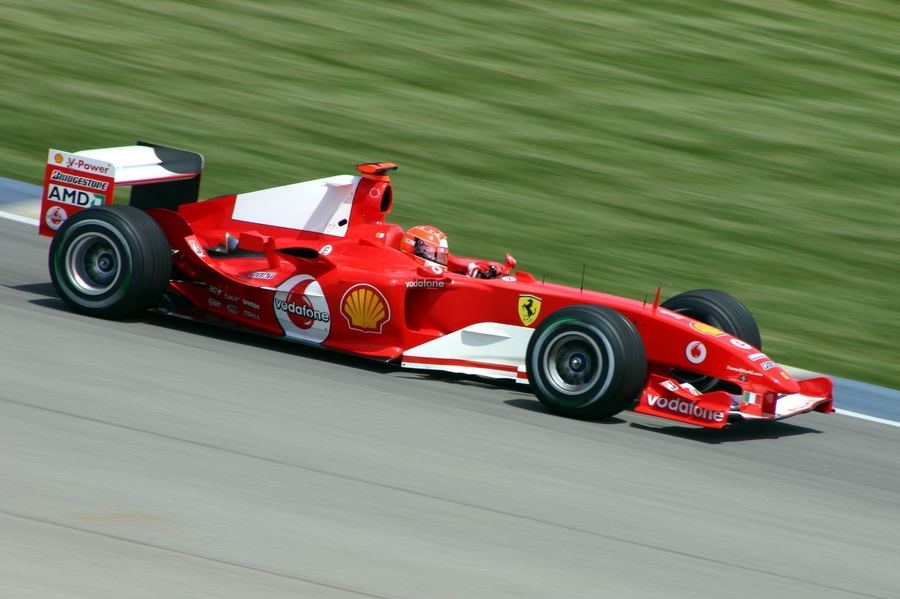
Ferrari is the only team to have competed in every Formula 1 season since the championship began in 1950, and holds the record for most constructors' championships in the sport's history. That combination of longevity and success gives Ferrari a genuinely unique status in the sport, with a fan base and cultural weight that extends well beyond its most recent competitive form in any given season.
Williams: independent racing's high-water mark
Williams built its championship record as a genuinely independent constructor rather than a manufacturer-backed factory team, winning multiple constructors' titles through the late 1980s and 1990s with a string of different engine partners. That run represents one of the strongest cases in F1 history for what a well-run, engineering-focused independent team can achieve without direct manufacturer ownership.
McLaren: multiple eras of dominance
McLaren has won multiple constructors' championships across genuinely distinct eras of the sport, from its dominant stretch through the 1980s with Prost and Senna to further title-winning periods in subsequent decades, giving it one of the more sustained long-term records among the sport's historic constructors. The team's continued presence at the front of the grid across such different technical periods reflects a deep, consistently reinvested engineering operation.
Mercedes: the hybrid-era juggernaut
Mercedes built one of the most dominant stretches in constructors' championship history during Formula 1's turbo-hybrid era beginning in 2014, winning the title across nearly every season of that regulatory period behind Lewis Hamilton and teammates. That run demonstrated how significant a head start on a major regulation change — in Mercedes' case, its power unit design — can compound into sustained multi-season dominance.
Red Bull: two distinct dominant periods
Red Bull has produced two separate periods of constructors' championship dominance in relatively young F1 history compared with legacy teams — first alongside Sebastian Vettel's four consecutive drivers' titles in the early 2010s, and again under the sport's current ground-effect regulations behind Max Verstappen. Producing two genuinely distinct dominant eras under different technical rule sets is a notable achievement for a team that only entered the sport in the early 2000s.
What actually separates a great constructor
The common thread across F1's most successful constructors isn't simply financial resources, though that matters — it's sustained continuity in technical leadership, a stable driver lineup during peak competitive windows, and the ability to correctly interpret and exploit new regulation changes faster than rivals. Teams that repeatedly win championships across multiple different rule eras, rather than dominating a single regulatory cycle, tend to be the ones fans and historians rate most highly.
How constructor form shapes every season
Understanding which constructor is genuinely strongest in a given season often explains far more about likely race outcomes than focusing purely on individual driver form, since a well-resourced, technically sharp team can elevate even a less heralded driver into regular podium contention. Tracking constructor trends across a season remains one of the more reliable ways to anticipate how a championship fight will actually unfold.
Why constructors' points affect a team financially, not just competitively
Beyond the trophy itself, a team's final position in the constructors' championship directly determines its share of Formula 1's commercial prize fund for the following season, meaning even a midfield battle for a single position can carry genuine financial stakes worth tens of millions of dollars. That financial dimension is part of why teams continue fighting hard for constructors' points even once a championship is mathematically settled at the front of the field.
Why both cars scoring matters more than one standout result
Because constructors' points come from both cars combined, a team with one dominant driver and one significantly weaker second car often loses out in the constructors' standings to a rival with two more evenly matched drivers, even if the first team's best individual result looks more impressive on paper. That dynamic makes a team's second driver — sometimes overlooked in media coverage focused on a title-fighting teammate — a genuinely important contributor to the constructors' championship outcome.
Frequently asked questions
Which F1 constructor has won the most championships?
Ferrari holds the record for most constructors' championships, and is the only team to have competed in every Formula 1 season since 1950.
What's the difference between the drivers' and constructors' championships?
The drivers' title goes to the individual with the most points across a season, while the constructors' title goes to the team whose two cars combined score the most points.
How did Williams win championships without being a manufacturer-backed team?
Williams built its record as a genuinely independent constructor, partnering with different engine suppliers across the years while focusing on strong in-house chassis engineering.
Why was Mercedes so dominant during F1's hybrid era?
A significant head start on power unit design when the turbo-hybrid regulations began in 2014 compounded into sustained multi-season dominance behind Lewis Hamilton and his teammates.
Has Red Bull had more than one dominant era?
Yes — first alongside Sebastian Vettel's four consecutive titles in the early 2010s, and again under F1's current ground-effect regulations behind Max Verstappen.
What actually makes a constructor successful long-term?
Sustained technical leadership continuity, a stable driver lineup during peak windows, and correctly interpreting new regulation changes faster than rivals, rather than financial resources alone.
Does the constructors' championship affect a team's finances?
Yes — final position directly determines a team's share of Formula 1's commercial prize fund for the following season, giving even a midfield battle genuine financial stakes.
Sources

Pippa has followed open-wheel racing for 12 years, from Formula 1's turbo-hybrid era to IndyCar's short ovals, and has watched competitive sim racing grow from a niche hobby into a genuine motorsport discipline in its own right. She covers circuit and open-wheel racing, touring cars and esports for CNMOTOS.
View all articles by Pippa Cook →