Where F2 and F3 actually sit in the pathway
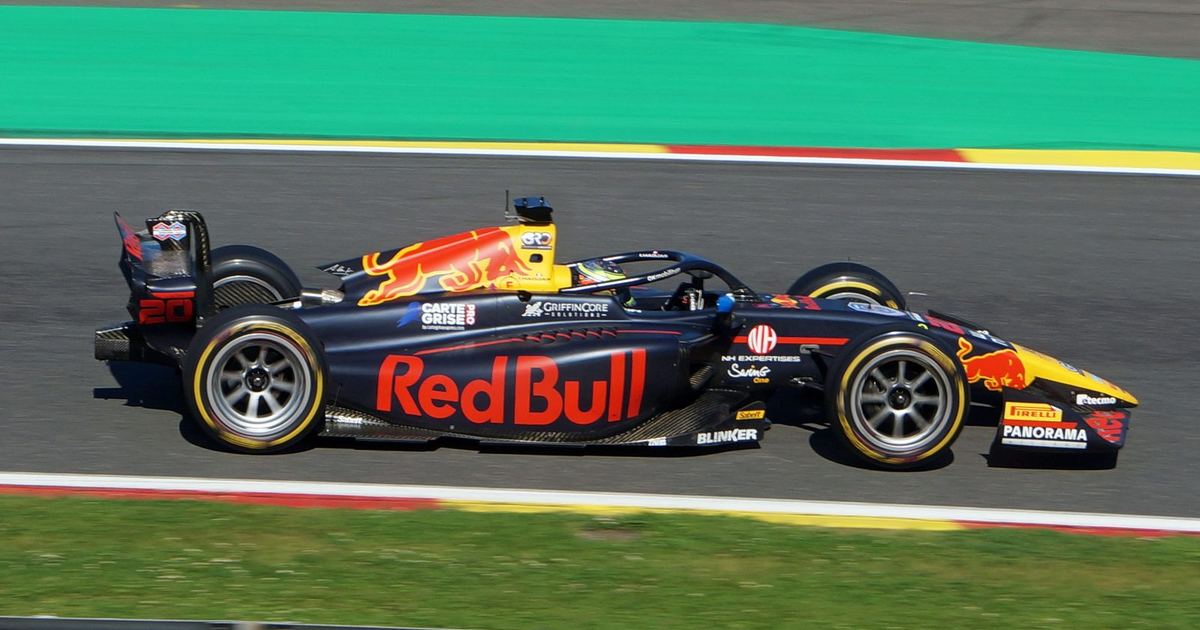
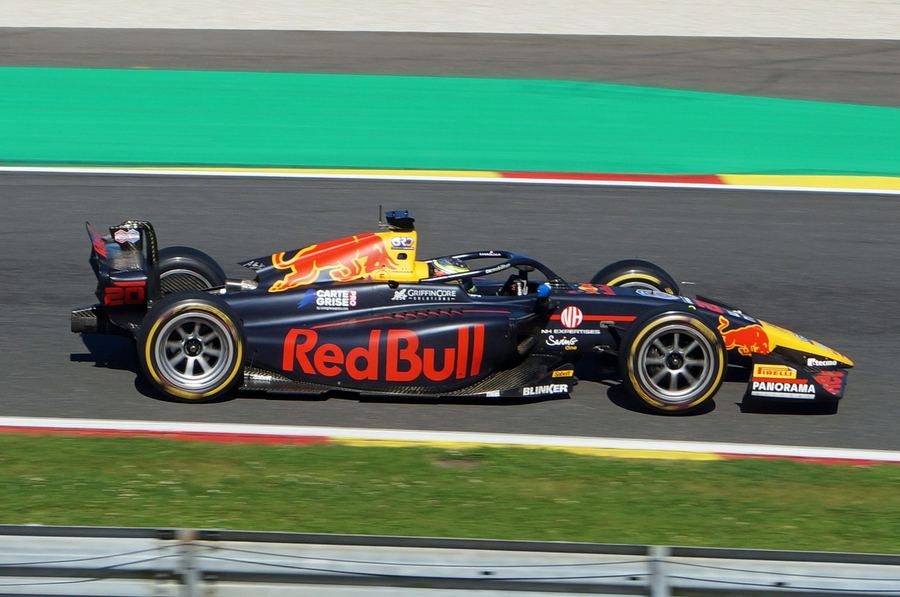
Formula 2 and Formula 3 are the FIA's own single-seater ladder directly beneath Formula 1 — not informal feeder series a manufacturer happens to sponsor, but the official FIA Global Pathway, run under the same governing body with technical and sporting regulations deliberately designed to prepare drivers for F1 itself. F3 sits below F2, and F2 sits directly below F1, both running as genuine FIA World Championships in their own right rather than junior curiosities.
That official status matters in a very concrete way: results in F2 and F3 feed directly into the FIA Super Licence points system that determines whether a driver is even eligible to race in Formula 1 at all — a mechanism no other feeder category, including IndyCar, benefits from as generously.
The cars: three real, verified spec levels
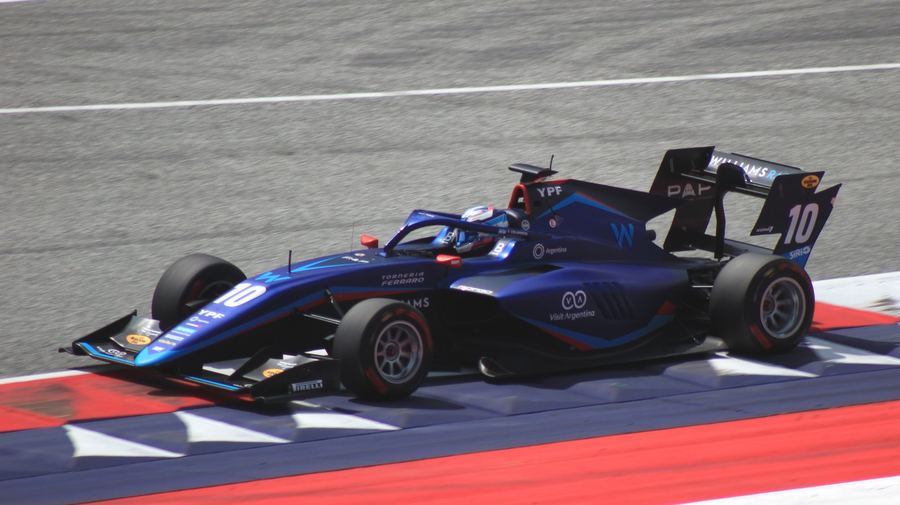
All three categories are spec series — every team runs an identical chassis, so results are decided by driver and team execution rather than engineering budget. But the machinery itself steps up in real, measurable stages. The Dallara F3 2025 runs a naturally aspirated 3.4-liter Mecachrome V6 producing 380 horsepower. The Dallara F2 2024 steps up to a turbocharged version of the same basic architecture — a Mecachrome V634T 3.4-liter single-turbo V6 — producing 620 horsepower at 8,750rpm, in a car weighing 795kg with driver and fuel. Formula 1's 2026 hybrid power units, by comparison, combine for roughly 1,000 horsepower in a car with a 768kg minimum weight.
That's a genuine, deliberate power staircase — 380hp, then 620hp, then roughly 1,000hp — designed to progressively prepare a driver for the car they're actually aiming to reach.
Race weekend format: sprint and feature races
Both F2 and F3 run a two-race weekend structure that will feel familiar to F1 fans: a Sprint Race (F2's runs 120km or 45 minutes, whichever comes first) and a Feature Race the next day (170km or 60 minutes), typically run in direct support of an actual Formula 1 Grand Prix weekend at the same circuit. F3 mirrors this with its own Sprint and Feature Race pairing.
Feature Race points in both series copy Formula 1's own scale exactly — 25 points for the win, down to 1 point for 10th — while each series' Sprint Race uses its own reduced scale. This is a deliberate design choice: drivers are learning to manage the same points-scoring logic they'll use in F1 itself, not a completely different system they'll have to unlearn.
Try it: how close does one season get you to F1?
This is the part most fans never see explained with real numbers. An F1 Super Licence requires at least 40 points accumulated over a rolling three-year window, and F2's own points table is generous enough that a single strong season can supply the entire requirement on its own.
How Close Does One Season Get You to a Super Licence?
Pick a series and a final championship position — these are the real FIA points tables, and 40 points is the actual minimum required for an F1 Super Licence.
Why F2 outweighs IndyCar for reaching F1
The 2026 season produced a genuinely concrete real-world example of this system in action: Colton Herta, an established IndyCar driver, moved to Formula 2 specifically to chase the Super Licence points he'd been unable to accumulate fast enough racing in America. With 35 points already banked, he needed only an 8th-place finish or better in F2's championship to cross the 40-point threshold — a target IndyCar's own, less generous points allocation made considerably harder to reach. For context, F2's top 10 finishers were allocated 201 combined Super Licence points in 2025, against just 124 for IndyCar's top 10 over the same period.
That gap exists by design, not accident — F2 is the FIA's own direct pathway into F1, so the federation weights it more heavily than series it doesn't directly govern.
Two separate points systems, easily confused
It's worth being explicit about a distinction that trips up a lot of new fans: the points that decide the F2 or F3 championship itself (race-by-race, Sprint and Feature Race results added up across a season) are a completely different system from the Super Licence points a driver earns toward F1 eligibility (based on final championship standing position, awarded once at season's end). A driver can have a brilliant season in terms of Super Licence points — finishing 3rd in F2 nets the full 40 — without necessarily having won the championship itself.
See our F1 cost cap explainer for how spending restrictions at the top of the pyramid contrast with F2 and F3's even tighter, fully spec-series cost control.
Real graduates: from these grids to an F1 seat
The pathway isn't theoretical — it's the normal route almost every current F1 driver actually took. Isack Hadjar raced in F2 through the 2024 season before graduating to a 2025 Formula 1 seat with Racing Bulls. Franco Colapinto competed in FIA Formula 3 in 2023 before working his way up to a Formula 1 seat with Alpine and Williams. Both are typical, not exceptional, examples of exactly how this pathway is meant to work.
Which one should a new fan actually watch?
F2 offers the closer, more direct preview of future F1 grids — its grid is smaller, its cars faster, and its results carry the most Super Licence weight, so a strong F2 season is usually the clearest early signal of who's about to arrive in F1. F3 offers a genuinely earlier look at the same pipeline, with younger drivers and a car deliberately built to be more forgiving to learn on.
Both run as support races at many F1 Grand Prix weekends, which makes them one of the easiest additions to an existing F1-watching habit — the same ticket, the same broadcast weekend, often the same circuit, several years before those same names show up on the F1 grid itself.
Frequently asked questions
What is the difference between F1, F2 and F3?
They're three tiers of the FIA's own official single-seater pathway, each a spec series with progressively more powerful cars — F3 (380hp), F2 (620hp), then F1 (roughly 1,000hp) — designed to prepare a driver in stages for Formula 1 itself.
Are F2 and F3 real FIA championships or just feeder series?
Both are genuine FIA World Championships, run under the same governing body as Formula 1, with technical and sporting regulations specifically designed as an official pathway into F1 — not informal sponsor-run junior series.
How much horsepower does an F2 car have compared to F3?
An F2 car (Dallara F2 2024) produces 620 horsepower from a turbocharged 3.4-liter Mecachrome V6, versus 380 horsepower from F3's naturally aspirated version of the same basic engine architecture.
What is an FIA Super Licence?
The eligibility credential every Formula 1 driver must hold, requiring at least 40 points accumulated over a rolling three-year window across FIA-recognized categories, plus a minimum age of 18 and FIA approval after medical and safety requirements.
How many Super Licence points does winning F2 give you?
The top 3 finishers in the final F2 championship standings each receive 40 points — the exact minimum needed for an F1 Super Licence, achievable in a single season.
How many Super Licence points does winning F3 give you?
30 points for the champion, on a full table running 30-25-20-15-12-9-7-5-3-2 for the top 10 — enough to matter, but never enough alone for a Super Licence.
Why did Colton Herta move from IndyCar to Formula 2?
To chase FIA Super Licence points more efficiently. With 35 points already banked, he needed only an 8th-place F2 championship finish or better to reach the 40-point threshold — a target IndyCar's comparatively smaller points allocation made harder to hit.
Do F2 and F3 use the same points system as F1?
Their Feature Races use F1's exact scale (25 points for the win down to 1 for 10th). Their Sprint Races use their own separate, smaller scale — and that whole race-points system is distinct from the separate Super Licence points based on final championship standing.
What car does Formula 2 use in 2026?
The Dallara F2 2024 — a spec chassis with a Mecachrome V634T 3.4-liter single-turbo V6 producing 620 horsepower, weighing 795kg with driver and fuel.
What car does Formula 3 use in 2026?
The Dallara F3 2025 — a spec chassis with a naturally aspirated 3.4-liter Mecachrome V6 producing 380 horsepower.
Which F1 drivers actually came up through F2 or F3?
Most of the current grid. Isack Hadjar raced F2 through 2024 before joining Racing Bulls in F1 for 2025; Franco Colapinto raced FIA Formula 3 in 2023 before reaching F1 with Alpine and Williams — typical examples of how the pathway is meant to work.
Can I watch F2 and F3 races alongside F1?
Yes — both run as support races at many Formula 1 Grand Prix weekends, on the same ticket and broadcast weekend, often years before the same drivers' names appear on the F1 grid itself.
Sources

Pippa has followed open-wheel racing for 12 years, from Formula 1's turbo-hybrid era to IndyCar's short ovals, and has watched competitive sim racing grow from a niche hobby into a genuine motorsport discipline in its own right. She covers circuit and open-wheel racing, touring cars and esports for CNMOTOS.
View all articles by Pippa Cook →

.jpg)
.jpg)