Origins Alongside Solo Motorcycle Racing
Sidecar racing developed early in motorcycle racing's history, growing directly out of the practical sidecar attachments used on road-going motorcycles for carrying a passenger, adapted for competitive racing use as the broader sport of motorcycle racing itself was taking shape. Sidecars first raced competitively at the Isle of Man TT in 1923, an instant hit with spectators watching 14 outfits tackle the Mountain Course.
In its earliest form, sidecar racing was closely associated with, and often run alongside, solo motorcycle racing events, rather than existing as a fully separate discipline with its own dedicated competitive structure.
The Passenger's Role Develops
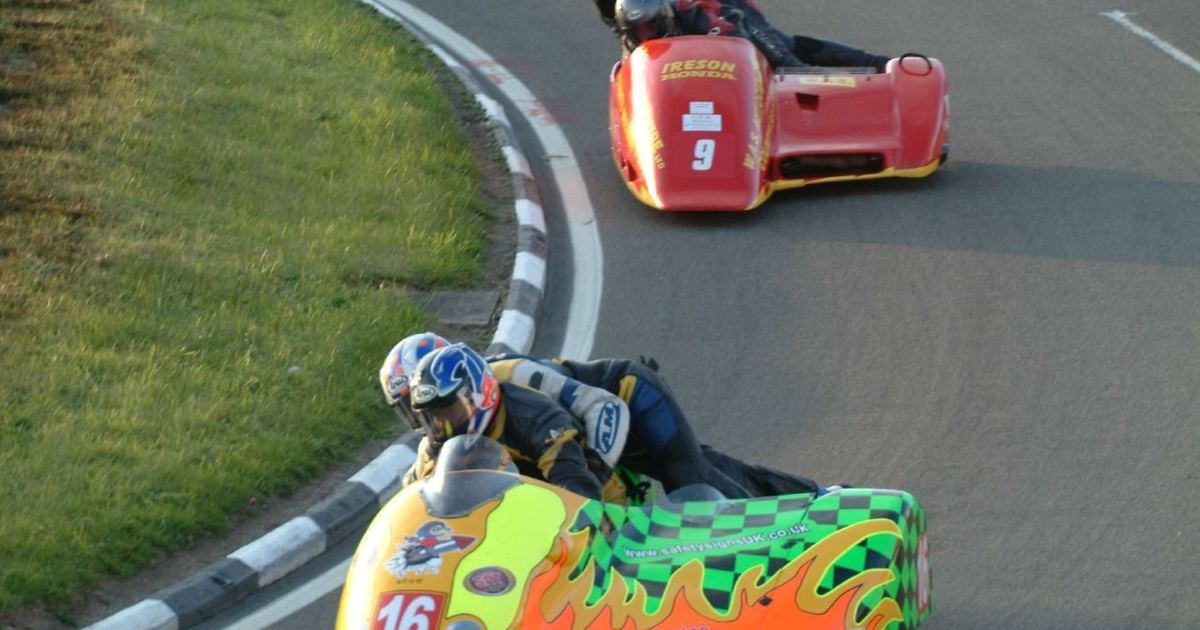
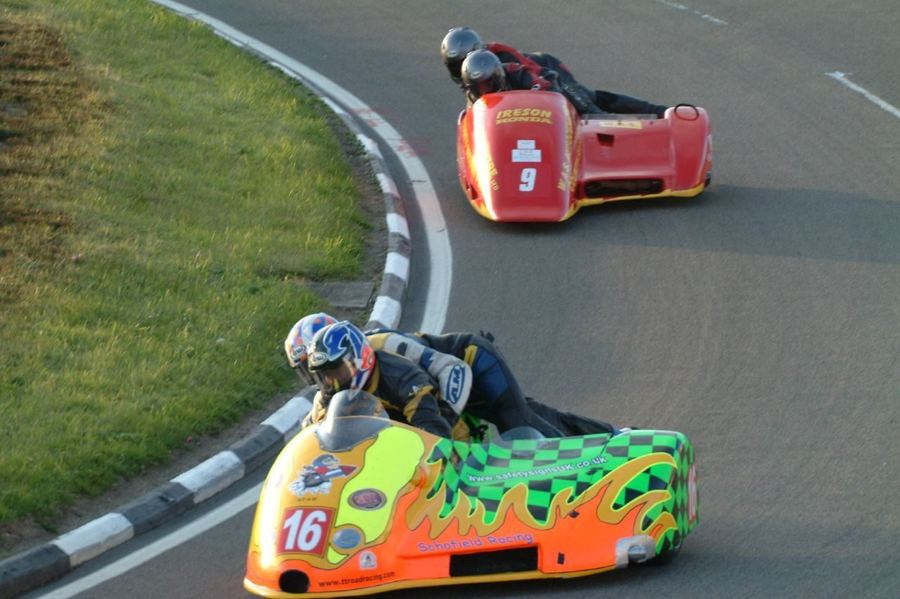
As competitive sidecar racing matured, the passenger's role evolved from a relatively passive position into the continuously active, physically demanding job it is today — leaning and shifting body weight constantly to help balance an outfit that cannot lean into corners the way a solo motorcycle does.
This evolution in technique is what transformed sidecar racing from a curiosity into a genuinely technical discipline requiring real skill and coordination from both crew members, rather than one person doing all the meaningful work.
The full timeline, year by year
Put the whole story together and it runs from a 1923 Isle of Man debut to a 2026 safety review, in five clear steps.
Sidecar Racing's History, Year by Year
From a 1923 Isle of Man debut to a 2026 safety review reshaping the discipline's most famous road-racing venue, in five verified steps. Press play, or click any point.
Sidecarcross Emerges as Its Own Branch
Sidecarcross developed as an off-road branch of the sport, adapting sidecar racing to motocross-style circuits and terrain, distinct from the road-racing sidecar competition that continued in parallel on paved circuits.
This split into off-road and road-racing branches mirrors, in miniature, the broader motorcycle racing world's own division between disciplines suited to different terrain, giving sidecar racing genuine internal variety rather than a single fixed format. See our explainer on how each format is scored for exactly how the two diverge in competition structure.
Achieving World Championship Status
Sidecarcross's path to world championship status ran through a European competition starting in 1971 as the FIM Cup, becoming the FIM European Championship in 1975, before the FIM elevated it to full Sidecarcross World Championship status in 1980. Road-racing sidecar competition achieved its own FIM world championship recognition in various forms as well.
This formalization was significant for a discipline that, by its nature, has always attracted a smaller competitive field than solo motorcycle racing — a dedicated world championship structure gave sidecar racing legitimacy and a clear competitive pinnacle despite its inherently niche following.
The 2026 TT Sidecar Sustainability Review
Sidecar racing's oldest road-racing venue faced a significant moment in 2026: following a series of serious incidents during practice week, organisers suspended Sidecar competition for the remainder of that year's Isle of Man TT. Rather than simply resuming unchanged the following year, the TT launched a formal Sidecar Sustainability Review, examining the class's safety, technical development, sporting health, participation levels, affordability and governance.
It's a genuinely open question at the time of writing how that review will reshape the class going forward — but it underlines a theme running through this whole history: sidecar racing has always required active institutional attention, from the format's near-cancellation in 1926 through to this latest, more serious reckoning a century later.
An Enduring, Genuinely Niche Discipline
Sidecar racing has remained a smaller, more specialized part of motorcycle racing throughout its history, never achieving the mainstream following of solo motorcycle Grand Prix racing, but maintaining a dedicated, knowledgeable fan base that values exactly what makes it distinctive.
This enduring niche status is not a sign of decline but reflects the discipline's genuinely specialized nature — the two-person coordination and specific machinery it demands make it a fundamentally smaller-scale pursuit than solo motorcycle racing by design, not by accident. See our honest guide to getting into sidecar racing for what that niche scale actually means for a newcomer.
Frequently asked questions
How old is sidecar racing?
It developed early in motorcycle racing's history, with the first competitive sidecar race at the Isle of Man TT held in 1923, growing out of practical sidecar attachments used on road-going motorcycles.
Was sidecar racing always its own separate discipline?
No. In its earliest form it was closely associated with, and often run alongside, solo motorcycle racing events, before developing into a genuinely separate discipline over time.
How did the passenger's role in sidecar racing develop?
From a relatively passive position into the continuously active, physically demanding job it is today, involving constant weight-shifting to help balance an outfit that cannot lean into corners like a solo motorcycle.
When did sidecarcross become a world championship?
The FIM elevated it to full Sidecarcross World Championship status in 1980, following a European competition that began in 1971 as the FIM Cup and became the FIM European Championship in 1975.
Does sidecar racing have world championship status?
Yes, both sidecarcross and road-racing sidecar competition hold formal FIM world championship recognition as separate top-level international competitions.
Is sidecar racing a mainstream motorsport?
No, it has remained a smaller, more specialized discipline throughout its history, never achieving the mainstream following of solo motorcycle Grand Prix racing, though it maintains a dedicated fan base.
Why does sidecar racing have a smaller following than solo motorcycle racing?
Its genuinely specialized nature — the two-person coordination and specific machinery it demands — makes it a fundamentally smaller-scale pursuit by design rather than a sign of decline.
Was the Sidecar TT always part of the Isle of Man TT?
No — it was dropped after 1926 due to a lack of entries, and only returned to the TT in the 1950s, when West German BMW machines came to dominate the class.
What happened to Sidecar racing at the 2026 Isle of Man TT?
Following a series of serious incidents during practice week, organisers suspended Sidecar competition for the remainder of the event and launched a formal Sidecar Sustainability Review into the class's safety, technical development and long-term future on the Mountain Course.
What does the TT's Sidecar Sustainability Review actually examine?
A broad range of factors beyond safety alone — technical development, sporting health, participation levels, affordability for competitors, and how the class is governed.
Who won the first Sidecar TT?
Freddie Dixon, with passenger Walter Denney, in 1923, completing the Mountain Course at a 53.15mph average aboard a Douglas motorcycle fitted with a banking sidecar.
Why did BMW dominate sidecar racing when it returned to the TT in the 1950s?
West German BMW machines held a strong technical edge during that era, taking the podium places as the discipline re-established itself after its 1926-1950s absence from the TT.
Sources

Jack has been a motorcycle racing enthusiast for as long as he can remember. For CNMOTOS, he covers everything from MotoGP and World Superbike to drag racing and the sport's more niche corners, like sidecar and three-wheel racing.
View all articles by Jack Korpela →