A Spec Series vs a Development Series
The single biggest difference is philosophical. IndyCar is a spec series: every team runs the same Dallara chassis, choosing between two approved engine suppliers (Honda or Chevrolet), with development tightly restricted. Formula 1 is the opposite — a development series where each of ten constructors designs and builds its own car within a shared regulatory framework, and that engineering competition is central to the sport's identity.
This single choice cascades into almost everything else. IndyCar's spec formula keeps costs far lower and keeps grids tightly matched on pure machinery, so results are driven more by setup, strategy and driving. F1's development race produces bigger performance differences between teams, but also generates far more of the technology transfer and engineering prestige the sport is known for.
Ovals Are the Real Divider
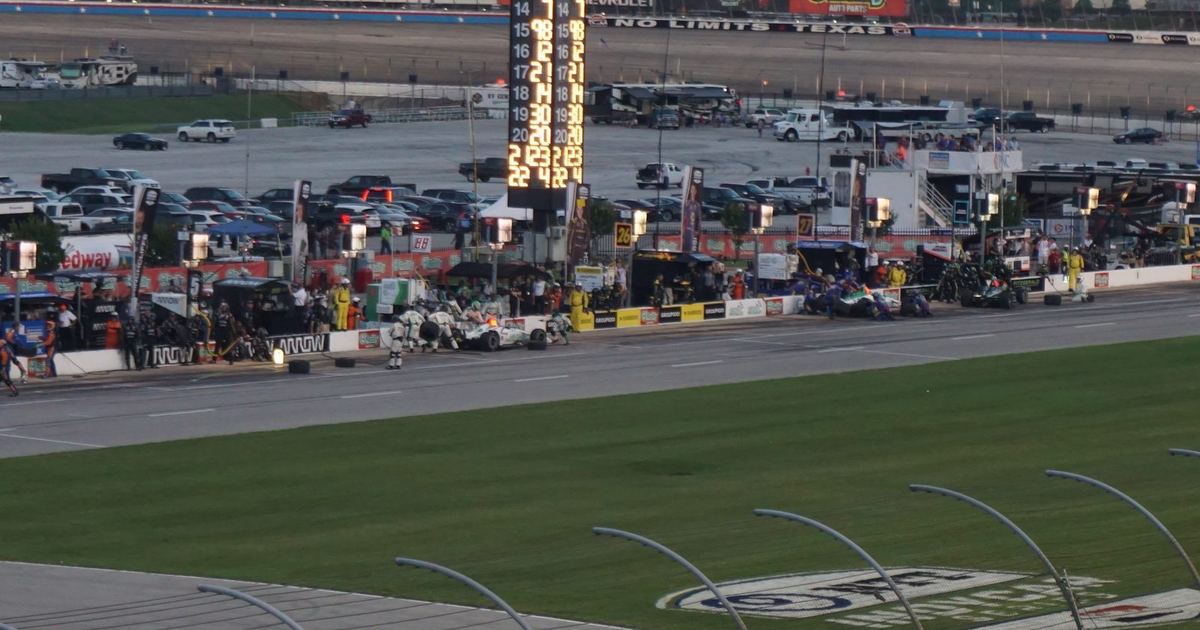
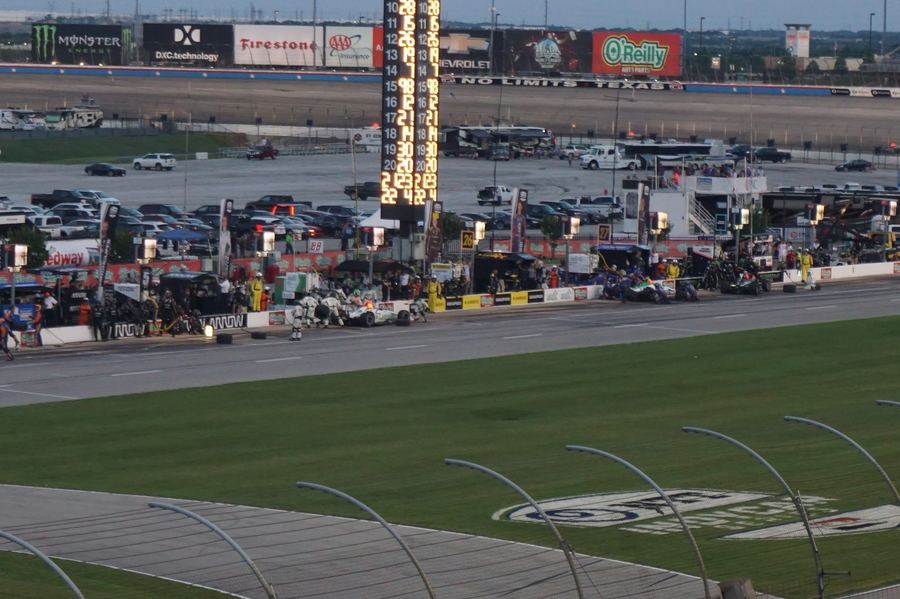
IndyCar races on superspeedways and short ovals as well as road and street circuits — a genuine range that no other major single-seater championship attempts. F1 does not race on ovals at all; every round is a road course or a street circuit.
Oval racing demands a completely different skill set: sustained high-speed drafting, wall awareness with almost no room for error, and cars set up for consistent high-speed handling rather than the varied demands of braking zones and corner combinations. It is arguably the aspect of IndyCar with no real equivalent in Formula 1 at all.
Try it: one chassis, two aero kits
That oval/road split isn't just a scheduling quirk — it means the same IndyCar chassis physically changes shape between race weekends. The oval aero kit runs a tiny rear wing, minimal front wing and a smooth underbody to cut drag for 230mph-plus straight-line speed. The road/street kit swaps in much larger wings front and rear, trading that top speed for the downforce needed to actually turn on a twistier circuit. F1's car never makes that trade — it runs one high-downforce configuration all season, because it never sees an oval.
One Chassis, Two Aero Kits — vs. F1's One
Switch IndyCar between its oval and road/street aero kits and watch the wings themselves change size. F1 never gets this choice — every round runs the same high-downforce setup.
No oval configuration exists — F1 has never raced on an oval in the modern era, so every car is set up for road and street-course cornering, all season.
IndyCar's oval kit trades away downforce for a smoother underbody and minimal wings, which is how the same Dallara chassis clears 230mph at Indianapolis. Swap to the road/street kit and the priority inverts completely — bigger wings front and rear, more downforce, lower top speed, better cornering. F1's car never has to make that choice, because it never faces that track type.
How the Cars Themselves Differ
F1 cars generate dramatically more downforce and use considerably more sophisticated aerodynamics and hybrid power units, which is reflected in cornering speeds that are generally higher than IndyCar's on comparable circuit types. IndyCar cars are heavier and aerodynamically simpler by design, a deliberate choice that keeps the spec formula affordable and keeps racing closer.
IndyCar's aeroscreen, a windscreen-style canopy protecting the cockpit, differs visually and structurally from F1's halo, though both exist for the same underlying reason: protecting a driver's head from debris in an open cockpit. Since July 2024, IndyCar has also carried its own hybrid system — see our breakdown of push-to-pass and the hybrid ESS for exactly how it stacks to over 800 horsepower on road and street courses.
2026 specs, side by side
| IndyCar | Formula 1 | |
|---|---|---|
| Chassis | Spec — one Dallara for every team | Bespoke — each constructor designs its own |
| Engine suppliers | Two (Honda, Chevrolet) | Four power unit manufacturers |
| Base power | 700+ hp, 800+ hp with hybrid + push-to-pass stacked | Roughly 1,000 hp (combustion + hybrid) |
| Cockpit protection | Aeroscreen (titanium frame, polycarbonate screen) | Halo (open titanium bar structure) |
| Track types | Superspeedways, short ovals, road and street courses | Road and street courses only — no ovals |
| Top speed | 230+ mph on ovals (2026 Indy pole: 232.2 mph); ~170–200 mph road/street | ~211–217 mph (340–350 km/h) on power circuits |
Which Championship Is More Competitive?
IndyCar is frequently held up as the more genuinely unpredictable championship on a week-to-week basis, precisely because the spec chassis limits how much of an advantage any one team's engineering can buy. Qualifying fields are routinely separated by fractions of a second, and race results are decided more by strategy calls, pit timing and push-to-pass management than by raw car performance.
F1, by contrast, tends to produce a smaller number of teams capable of winning in a given season, because development budget differences compound over a year. That does not make F1 less competitive in an absolute sense — the drivers and machinery are extraordinarily capable — but the distribution of who can realistically win is usually narrower.
Scale, Budget and Global Reach
Formula 1 operates on a vastly larger global commercial scale, with team budgets, sponsorship deals and broadcast reach that dwarf IndyCar's. It is unambiguously the wealthier and more globally recognized championship.
IndyCar's spec formula is partly a direct response to that reality: rather than trying to compete on development spend, it competes on affordability, closeness of competition, and a distinctly American identity built around ovals and the Indianapolis 500 that F1 does not attempt to replicate. See our history of IndyCar for how that identity survived a twelve-year internal split.
Do Drivers Move Between Them?
It happens, though less often than fans might expect, and usually in one direction more than the other. A number of drivers who did not secure or keep an F1 seat have built successful IndyCar careers, and IndyCar's competitiveness means that move is not seen as a step down the way it once might have been.
Moving from IndyCar to F1 is rarer, partly because F1 seats are scarce and highly sought after globally, and partly because the driving skills, while related, are not identical — oval experience in particular does not transfer to anything F1 drivers are asked to do.
Frequently asked questions
Is IndyCar the same as F1?
No. Both are open-wheel single-seater championships, but IndyCar is a spec series where every team runs the same chassis, while F1 is a development series where each constructor builds its own car.
Does IndyCar race on ovals like F1 does?
IndyCar races on superspeedways and short ovals as well as road and street circuits. Formula 1 does not race on ovals at all — every round is a road or street course.
Why does IndyCar have two different aero kits?
Because the same spec chassis needs a completely different setup depending on circuit type. The oval kit uses tiny wings and a smooth underbody to minimize drag for 230mph-plus speeds; the road/street kit uses much larger wings for the downforce needed to actually corner.
Which is faster, IndyCar or F1?
On ovals, IndyCar's top speed (230+ mph, 232.2 mph at the 2026 Indy 500 pole) actually exceeds F1's typical top speed of 211–217 mph. But F1 cars generate far higher downforce and are unambiguously faster through corners on comparable circuit types.
Which championship is more competitive, IndyCar or F1?
IndyCar is often considered more unpredictable week to week because its spec chassis limits how much advantage engineering development can buy, producing tightly matched qualifying fields and results decided heavily by strategy.
Why don't more F1 drivers move to IndyCar?
Some do, particularly drivers who did not secure or retain an F1 seat, and IndyCar's high level of competition means the move is not seen as a step down. It is less common in the other direction because F1 seats are scarce and highly sought after.
What is IndyCar's equivalent of F1's halo?
The aeroscreen, a windscreen-style canopy that protects the cockpit. It differs structurally and visually from the halo but serves the same purpose of protecting the driver's head in an open cockpit.
Is F1 more expensive than IndyCar?
Yes, considerably. F1 operates on a much larger global commercial scale with far higher team budgets, driven partly by its development-focused format, while IndyCar's spec formula is a deliberate choice to keep costs lower.
How much horsepower do IndyCar and F1 cars make?
IndyCar's hybrid V6 makes 700+ hp, rising past 800 hp when push-to-pass and the hybrid boost are both deployed on a road or street course. F1's hybrid power units produce roughly 1,000 hp.
Does F1 have an equivalent to IndyCar's oval kit?
No — because F1 has never raced on an oval in the modern era, its cars run one high-downforce configuration all season, with no low-drag oval-specific setup to switch to.
How many engine suppliers does each series have?
IndyCar has two (Honda and Chevrolet). F1 has four power unit manufacturers supplying its ten constructors.
Which series' cockpit protection came first, the aeroscreen or the halo?
F1's halo was introduced first, debuting in 2018; IndyCar's aeroscreen followed, introduced across the grid from the 2020 season.
Sources

Pippa has followed open-wheel racing for 12 years, from Formula 1's turbo-hybrid era to IndyCar's short ovals, and has watched competitive sim racing grow from a niche hobby into a genuine motorsport discipline in its own right. She covers circuit and open-wheel racing, touring cars and esports for CNMOTOS.
View all articles by Pippa Cook →