What Push-to-Pass Actually Does
Push-to-pass is a driver-activated system that adds a temporary boost of roughly 60 horsepower on top of the car's normal output. The driver presses a button on the steering wheel, and for as long as they hold it, the engine control unit allows extra power through.
It exists to help solve a problem that is specific to open-wheel racing: cars generate so much of their grip from aerodynamics that following closely in another car's turbulent air makes overtaking very difficult. A short burst of extra power gives an attacking driver a tool to complete a pass that pure racecraft might not achieve on its own.
Road and Street Courses Only
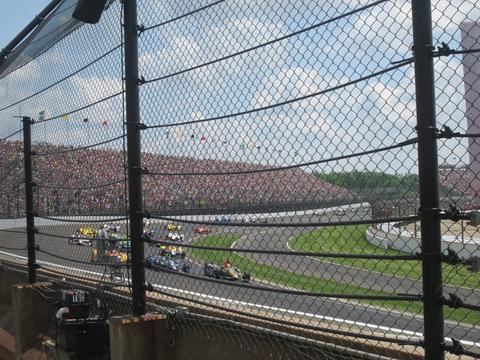
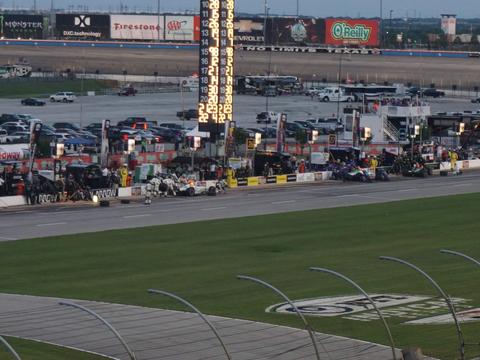
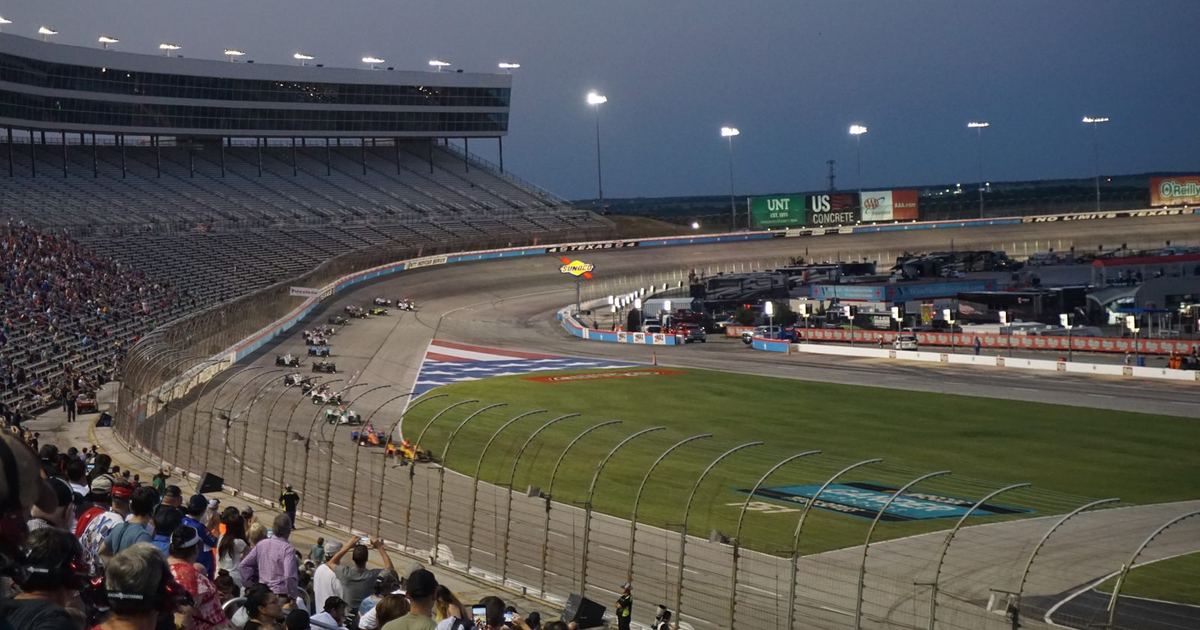
Push-to-pass is not used on ovals. On a superspeedway or short oval, cars already run close together at very high average speed, and adding an on-demand power boost into that environment would be a significant safety risk rather than a passing aid.
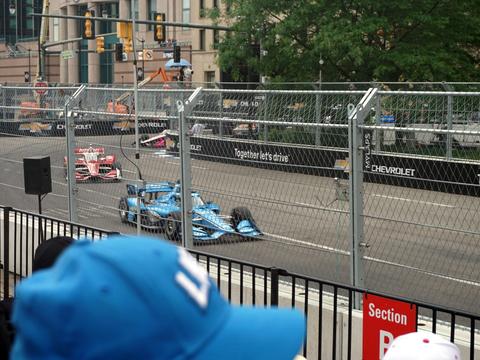
It is only active on IndyCar's road and street course rounds, where speeds are lower, braking zones are more defined, and a burst of extra power in a straight line is a controllable, visible passing tool rather than a hazard.
A Fixed Budget, Not Unlimited Power
Every driver gets a fixed time allowance of push-to-pass for the whole race, and once it is used up, it is gone. On most road courses the budget is around 200 seconds total, with a limit of roughly 20 seconds for any single activation. Some tighter street circuits allow less — around 150 seconds total, with a 15-second cap per push.
That budget turns push-to-pass into a genuine strategic resource rather than a free boost. A driver has to decide whether to spend it early to build a gap, save it to defend or attack late in the race, or use it in smaller bursts to simply stay in touch with a rival.
How the Rules Have Evolved
IndyCar has adjusted push-to-pass availability multiple times as it looks for the right balance between strategy and predictability. Earlier rules restricted its use immediately after a start or restart, which occasionally caught drivers out and became a source of genuine controversy when a car was penalized for pressing the button a lap too early.
For 2026, IndyCar expanded when the system can be used, allowing it immediately once a car crosses the alternate start-finish line following a start, and extending that same immediate availability to restarts. The change was made specifically to remove the confusion and inconsistent penalties that the older restriction had been producing.
Why It Becomes a Strategic Weapon
Because the budget is fixed and visible to teams via telemetry, push-to-pass turns into a running calculation across the whole race. A driver stuck behind a slower car might burn ten seconds of push-to-pass attempting a pass, while the car ahead spends its own allocation trying to defend — both are drawing down a resource that cannot be replenished.
Late in a race, drivers who have conserved their allocation carefully can have a considerable advantage over rivals who spent theirs earlier chasing position. Race engineers track remaining push-to-pass time as closely as fuel and tire wear, because running out at the wrong moment can be just as costly.
How to Spot It as a Viewer
Broadcasts typically display each driver's remaining push-to-pass allocation on screen, updating in real time as it is used. Watching that number tick down during a late-race battle is often a better guide to what is about to happen than watching the cars alone.
On track, the tell is usually a sudden change in acceleration out of a corner or down a straight that looks disproportionate to what the car was doing a lap earlier — that is almost always push-to-pass being deployed for an attack or a defensive move.
Frequently asked questions
How much power does push-to-pass add in IndyCar?
Roughly 60 horsepower on top of the car's normal output, activated by the driver pressing a button on the steering wheel for as long as they choose to hold it.
Is push-to-pass used on oval tracks?
No. It is only available on IndyCar's road and street course rounds. On ovals, where cars already run close together at very high speed, an on-demand power boost would be a safety risk rather than a passing tool.
How much push-to-pass time does a driver get per race?
It varies by circuit, but most road courses allow around 200 seconds total with a 20-second limit per activation, while some tighter street circuits cap it at around 150 seconds total with a 15-second limit per push.
Can push-to-pass run out during a race?
Yes. Once a driver's allocated time is used up, the system is unavailable for the rest of the race, which is why teams manage it as carefully as fuel or tire life.
What changed with push-to-pass rules for 2026?
IndyCar now allows push-to-pass immediately once a car crosses the alternate start-finish line after a start, and extended that same immediate availability to race restarts, removing an older restriction that had caused confusing penalties.
Why does push-to-pass exist in IndyCar?
Open-wheel cars rely heavily on aerodynamic grip, which makes following closely in another car's turbulent air difficult. Push-to-pass gives an attacking driver a short, controllable burst of extra power to help complete a pass.
Can a viewer tell when a driver uses push-to-pass?
Broadcasts usually display each driver's remaining allocation on screen in real time, and on track it often shows as a sudden burst of acceleration that looks stronger than what the car produced a lap earlier.

Pippa has followed open-wheel racing for 12 years, from Formula 1's turbo-hybrid era to IndyCar's short ovals, and has watched competitive sim racing grow from a niche hobby into a genuine motorsport discipline in its own right. She covers circuit and open-wheel racing, touring cars and esports for CNMOTOS.
View all articles by Pippa Cook →