
Founding an Electric World Championship
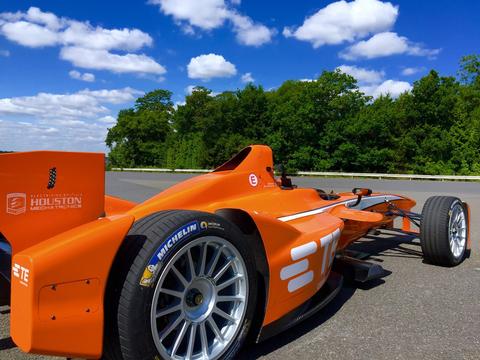
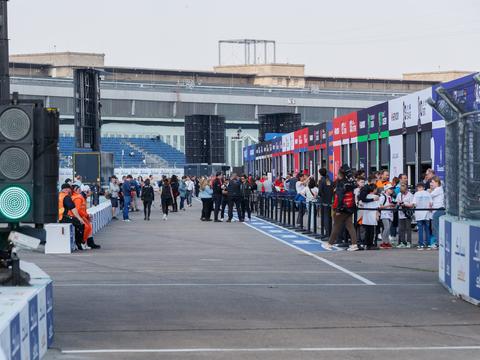
Formula E was conceived in the early 2010s as the FIA's answer to a genuine gap in world championship motorsport: nothing existed at the top level built specifically around electric powertrains. The series held its inaugural race in 2014, choosing city-center street circuits from the outset as a deliberate statement about where electric performance mattered most.
That founding choice — street circuits in major cities rather than permanent racetracks — has remained a defining part of Formula E's identity through every car generation since.
The First Generation: Spark-Renault
The original Formula E car, generally referred to as Gen1, used a common Spark-Renault chassis and battery for every team. Battery technology at the time could not sustain a full race distance, which meant drivers had to make a mid-race pit stop to physically swap into a second, fully charged car — an unusual and now-discontinued feature unique to Formula E's early seasons.
Despite that limitation, Gen1 proved the core concept worked: full-grid, wheel-to-wheel electric racing on demanding street circuits was viable and drew genuine competitive interest from manufacturers.
Gen2 and the End of Car Swaps
Gen2 arrived with sufficient battery capacity to complete a full race in a single car, eliminating the mid-race swap entirely and marking Formula E's transition from a proof-of-concept series toward a more conventional single-car race format.
This generation also introduced the halo cockpit protection device and a more aggressive, futuristic visual design, alongside the first version of Attack Mode as a strategic passing mechanic.
Gen3: Lighter, Faster and More Efficient
Gen3 brought a lighter chassis, higher power output, and — for the first time — front-axle regenerative braking in addition to the rear, substantially increasing the proportion of energy the car could recover under braking rather than relying solely on friction brakes.
It also removed rear friction brakes almost entirely on many cars, relying on regenerative braking for the majority of stopping power at the rear — a genuinely distinctive engineering choice compared with any other single-seater category.
Gen4: The Next Step
Formula E's Gen4 car takes over from the 2026/27 season, and it represents the largest single performance jump in the championship's history. Peak power rises to 600kW — roughly 805 horsepower — available in qualifying and when Attack Mode is engaged, with 450kW available in standard race running.
Gen4 introduces permanent all-wheel drive, making it the only single-seater in world championship racing to run all-wheel drive throughout a race, along with a higher top speed, faster acceleration, and a switch in tire supplier as the championship enters its next technical era.
Why the Generational Changes Matter
Each Formula E car generation has directly addressed the previous one's biggest limitation: Gen2 solved Gen1's range problem, Gen3 improved efficiency and reduced weight, and Gen4 pushes outright performance and adds all-wheel drive as battery and motor technology matures.
That rapid generational turnover is itself part of Formula E's pitch to manufacturers and fans: the championship functions as a visible, accelerated demonstration of how quickly electric vehicle performance has genuinely improved, generation to generation, in a way a slower-moving category could not showcase as clearly.
Frequently asked questions
What was Formula E's first car called?
Gen1, built around a common Spark-Renault chassis and battery shared by every team. It debuted at the series' inaugural 2014 season.
Why did early Formula E drivers change cars mid-race?
Gen1's battery technology could not sustain a full race distance, so drivers swapped into a second, fully charged car partway through. This requirement ended once Gen2 arrived with sufficient battery capacity.
When does Formula E's Gen4 car debut?
In the 2026/27 season, representing the largest single performance jump in the championship's history so far.
How much power does the Gen4 Formula E car have?
Up to 600kW, roughly 805 horsepower, available in qualifying and when Attack Mode is engaged, with 450kW available during standard race running.
Does Formula E use all-wheel drive?
The Gen4 car introduces permanent all-wheel drive, making it the only single-seater in world championship racing to run all-wheel drive throughout an entire race.
Why does Formula E race on street circuits?
It was a deliberate founding choice: racing in city centers ties electric racing's performance demonstration directly to the urban environments where it is most relevant, and has remained a defining feature through every car generation.
What changed with the Gen3 car?
Gen3 introduced a lighter chassis, higher power, front-axle regenerative braking in addition to the rear, and removed rear friction brakes on many cars in favor of regenerative braking.

Pippa has followed open-wheel racing for 12 years, from Formula 1's turbo-hybrid era to IndyCar's short ovals, and has watched competitive sim racing grow from a niche hobby into a genuine motorsport discipline in its own right. She covers circuit and open-wheel racing, touring cars and esports for CNMOTOS.
View all articles by Pippa Cook →