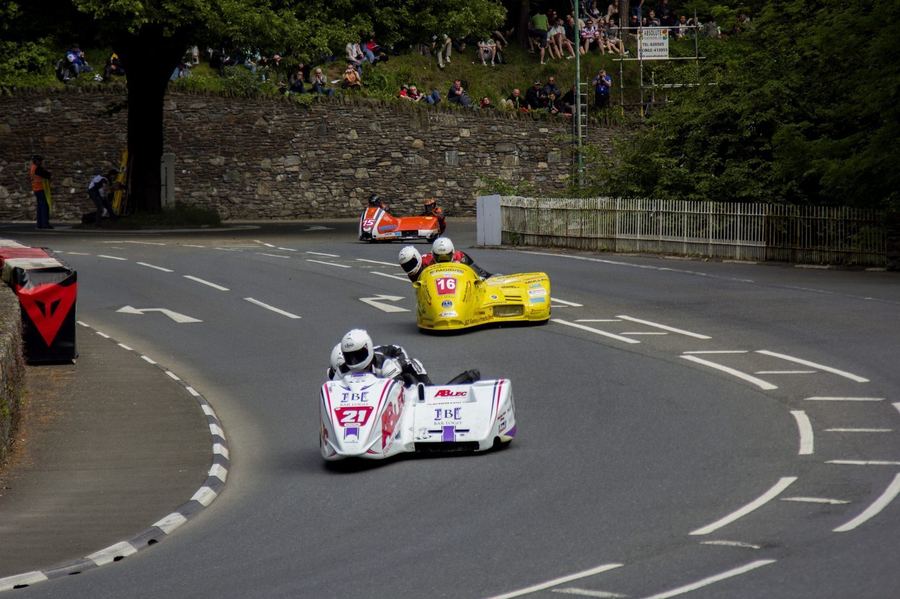
One Competitor vs Two, Genuinely Sharing the Job
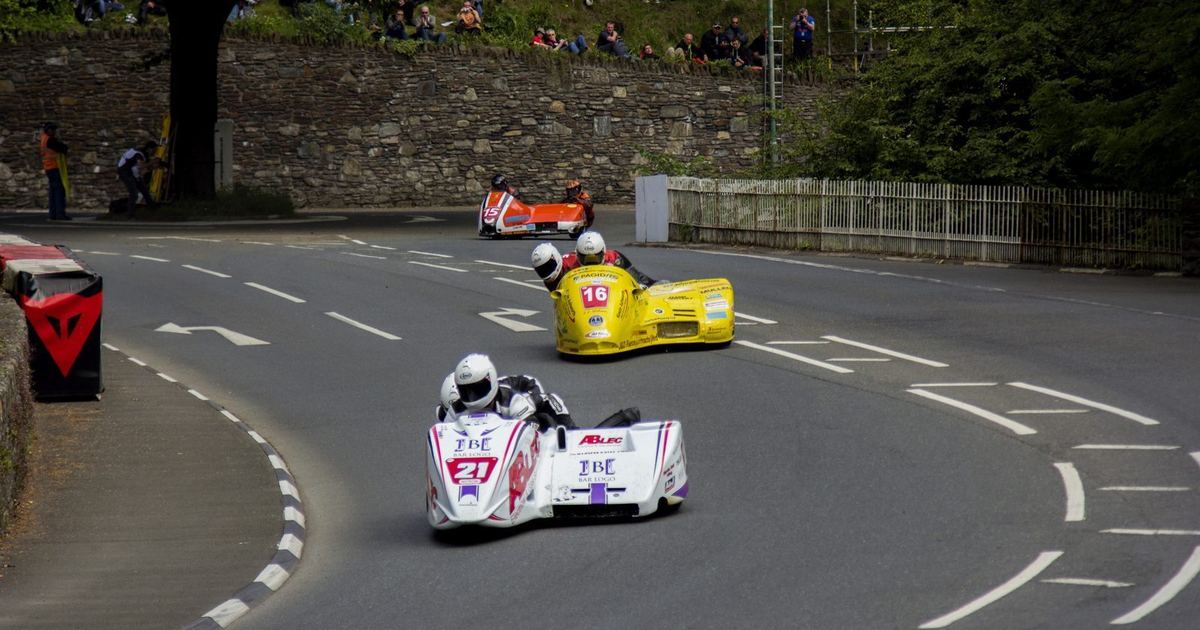
Solo motorcycle racing is a single rider managing every input — throttle, braking, lean angle and line — entirely alone. Sidecar racing is fundamentally a two-person job, with the passenger's continuous weight-shifting just as essential to the outfit's performance as the driver's steering and throttle control.
This is not a minor difference in supporting role; a sidecar outfit genuinely cannot be ridden competitively without a passenger actively working throughout the run, unlike a solo motorcycle where the rider alone determines everything.
Leaning Into Corners vs Staying Upright
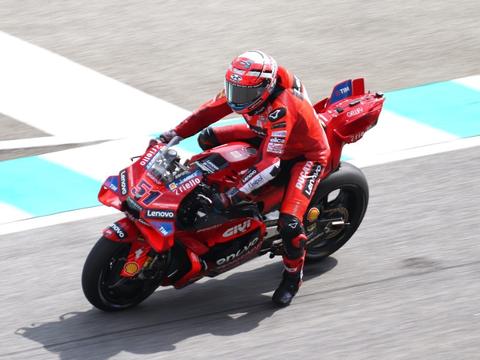
A solo motorcycle leans into a corner, using lean angle itself to generate cornering grip and balance. A sidecar outfit's third wheel makes it fundamentally asymmetric, and it cannot lean the same way — instead, the crew's combined body weight is shifted physically to keep the machine balanced and loaded correctly through a corner.
This single mechanical difference explains almost everything else about how differently the two disciplines are ridden: solo motorcycle racing is about managing lean angle, sidecar racing is about managing weight distribution through physical crew movement instead.
Try it: same corner, two solutions
Drag the slider below and watch the two disciplines solve identical cornering demands in completely different ways — one leans, one stays flat and moves its crew instead.
Same Corner, Two Ways to Take It
Drag the corner-severity slider and watch how a solo motorcycle and a sidecar outfit solve the exact same problem completely differently.
The whole machine leans — lean angle itself generates the cornering balance.
The machine stays upright — the passenger physically moves to shift the crew's combined weight instead.
Communication Without Words
A solo rider needs no communication with anyone else during a race. A sidecar crew must anticipate each other's movements precisely, at speed, with essentially no ability to communicate verbally mid-corner — timing and shared experience substitute for explicit instruction.
Successful sidecar pairings often stay together for extended periods specifically because this non-verbal coordination takes considerable time to develop, and swapping partners frequently would undermine performance in a way solo racing simply does not have to account for.
Different Physical Demands
Solo motorcycle racing places enormous physical demands on a rider's core strength, grip endurance and overall fitness for managing the bike alone. Sidecar racing's passenger role is arguably even more physically extreme in certain respects — continuously moving body weight around an exposed platform at high speed for the duration of a race.
Neither role is easier than the other; they are simply physically demanding in different, specific ways suited to each discipline's distinct requirements.
How the Machinery Itself Differs
A solo racing motorcycle is a single unit optimized for lean-angle cornering and rider-alone control. A sidecar outfit is a fundamentally different, asymmetric machine — three wheels, a passenger platform, and handling characteristics built around crew weight transfer rather than lean.
This means skills and setup knowledge do not transfer cleanly between the two; a rider experienced purely in solo motorcycle racing would need to learn genuinely new technique to ride a sidecar outfit competitively, and vice versa. See our sidecar racing glossary for the specific terms — outfit, platform, weight transfer — this mechanical difference produces.
Why Sidecar Racing Deserves Its Own Category
Given how fundamentally the two-person, weight-transfer-based mechanics of sidecar racing differ from solo motorcycle racing's lean-angle-based approach, treating sidecar racing as a genuinely separate discipline — rather than a variant of solo motorcycle racing — reflects the actual technical reality rather than an arbitrary categorization.
This is precisely why sidecar racing maintains its own dedicated world championships, its own specific technique and its own devoted fan base, distinct from, rather than subordinate to, mainstream solo motorcycle racing. See our history of sidecar racing for how that separate identity actually developed.
Frequently asked questions
What is the biggest difference between sidecar racing and solo motorcycle racing?
Sidecar racing is fundamentally a two-person job, with the passenger's continuous weight-shifting as essential to performance as the driver's inputs, unlike solo motorcycle racing where one rider manages everything alone.
Why can't sidecar outfits lean into corners like solo motorcycles?
The third wheel makes a sidecar outfit fundamentally asymmetric, so it cannot lean the way a solo motorcycle does. Instead, the crew shifts their combined body weight to keep the machine balanced through corners.
Do sidecar crews communicate during a race?
Not verbally in any meaningful way at speed. Successful crews rely on anticipating each other's movements through timing and shared experience rather than explicit mid-corner instruction.
Is the sidecar passenger role physically easier than riding solo?
No, arguably it is even more physically extreme in certain respects, involving continuous body weight movement around an exposed platform at high speed for the duration of a race.
Can a solo motorcycle racer easily switch to sidecar racing?
Not without learning genuinely new technique. Sidecar racing's weight-transfer-based mechanics differ fundamentally from solo motorcycle racing's lean-angle-based approach, so skills do not transfer directly.
Why is sidecar racing considered its own discipline rather than a variant of motorcycle racing?
Because its two-person, weight-transfer-based mechanics differ so fundamentally from solo motorcycle racing's lean-angle approach that it reflects a genuinely distinct technical reality, not an arbitrary categorization.
Do successful sidecar pairings usually stay together?
Often yes, since the non-verbal coordination between driver and passenger takes considerable time to develop, and frequently swapping partners would undermine that hard-won coordination.
Does a sidecar outfit ever lean at all?
Not in the way a solo motorcycle does. Some road-racing 'kneeler' designs sit the driver very low for aerodynamics, but cornering balance still comes from crew weight transfer, not from banking the machine itself.
Why does sidecar racing require more upfront trust between competitors than solo racing?
Because the passenger has to commit their full body weight to positions dictated by the driver's cornering choices, at speed, with no time to verify or adjust — that only works with deeply practiced trust.
Is one crew role, driver or passenger, considered more important?
No — sidecar racing's scoring and culture treat both as equally essential, since the outfit's performance depends completely on both roles working together rather than one supporting the other.
What determines how far a passenger has to move on the platform?
How severe the corner is and how much speed the crew is carrying — a gentle corner needs only a small weight shift, while a fast, tight corner can demand the passenger extend almost fully off the platform.
Is sidecar racing more dangerous than solo motorcycle racing?
Both carry real risk, but the two-person, weight-transfer-based format introduces its own specific hazards — the passenger's exposed position and total dependence on the driver's line choices differ from anything solo riders face.

Jack has been a motorcycle racing enthusiast for as long as he can remember. For CNMOTOS, he covers everything from MotoGP and World Superbike to drag racing and the sport's more niche corners, like sidecar and three-wheel racing.
View all articles by Jack Korpela →