The non-negotiables
Three things are effectively mandatory. The car must be rear-wheel drive, because the slide is generated and sustained by the rear axle. It needs a manual gearbox for clutch control during initiation and transitions. And it must have a locked or welded differential so both rear wheels turn together.
Everything else is a matter of degree. A car meeting those three requirements can be drifted; the remaining characteristics determine how easily, how predictably and how far it can be developed.
Weight distribution and wheelbase
Balance close to 50:50 makes a car's behaviour easier to predict, because the front and rear tyres reach their limits at broadly similar times. A nose-heavy car tends to understeer into corners and then snap when the rear finally lets go, which is harder to catch.
Wheelbase changes the character rather than the capability. A longer wheelbase makes a slide more stable and forgiving, which is why longer cars are pleasant to learn in. A shorter wheelbase rotates more eagerly and transitions faster, which experienced drivers prefer and beginners find nervous.
Steering angle: the real differentiator
The single biggest limit on how far a car can be drifted is how far the front wheels will turn. In a large-angle slide the front wheels must point substantially into the corner just to keep the car travelling forwards; when they run out of travel, the car spins. Stock steering systems typically max out around 30–40 degrees. Aftermarket angle kits — modified knuckles, relocated steering arms, reworked suspension geometry — push that to roughly 55–70 degrees, and professional Formula Drift-spec cars commonly run 70–90 degrees or more.
Try it yourself below: set the available lock and see what category of car actually has enough steering to sustain that angle before spinning.
Steering Angle: How Much Is Enough?
Drag the slider to set how much steering lock a car has, and watch how much drift angle it can actually sustain before running out of wheel.
Real bands: stock steering systems max out around 30–40°. Aftermarket angle kits push that to roughly 55–70°. Professional Formula Drift-spec cars run 70–90°+, which is what lets them hold the extreme, near-perpendicular angles the sport is known for.
Named chassis, compared
| Chassis | Era | Stock engine | Why it's chosen |
|---|---|---|---|
| Toyota Corolla Levin/Trueno (AE86) | 1983–1987 | 1.6L 4A-GE I4, NA | The original — Tsuchiya's Pluspy car. Light, cheap, huge parts ecosystem, low power ceiling by modern standards |
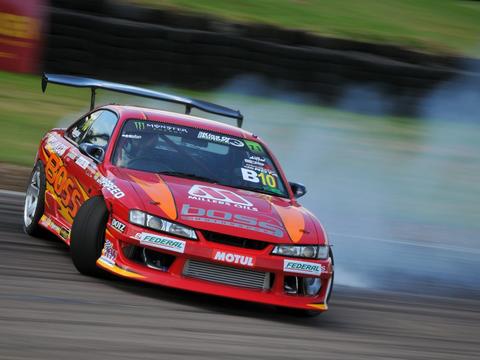
| Nissan Silvia (S13/S14/S15) | 1988–2002 | 2.0L SR20DET turbo I4 | The most common grassroots chassis worldwide — near-perfect balance, simple RWD layout, enormous aftermarket support |
| Mazda RX-7 (FC/FD3S) | 1985–2002 | 13B twin-rotor rotary | Exceptionally light and low, favoured historically at professional level for its balance and compact engine |
| BMW 3 Series (E36/E46) | 1990–2006 | 2.5–3.2L inline-6 | The dominant Western alternative to Japanese coupés — heavier, but a strong chassis with deep aftermarket support |
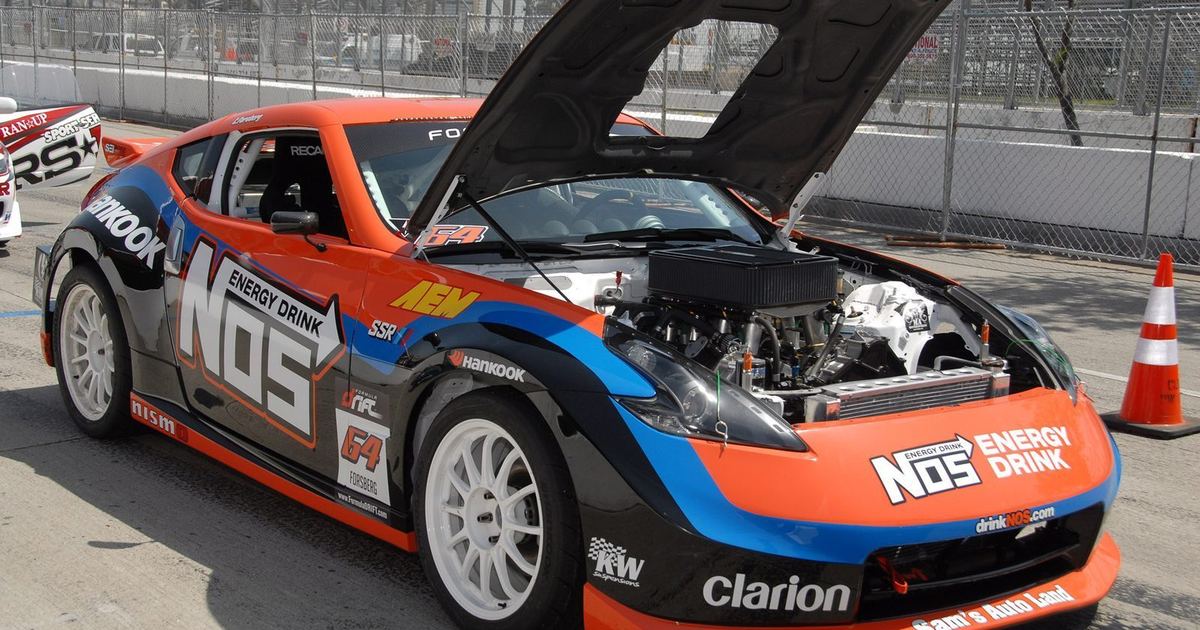
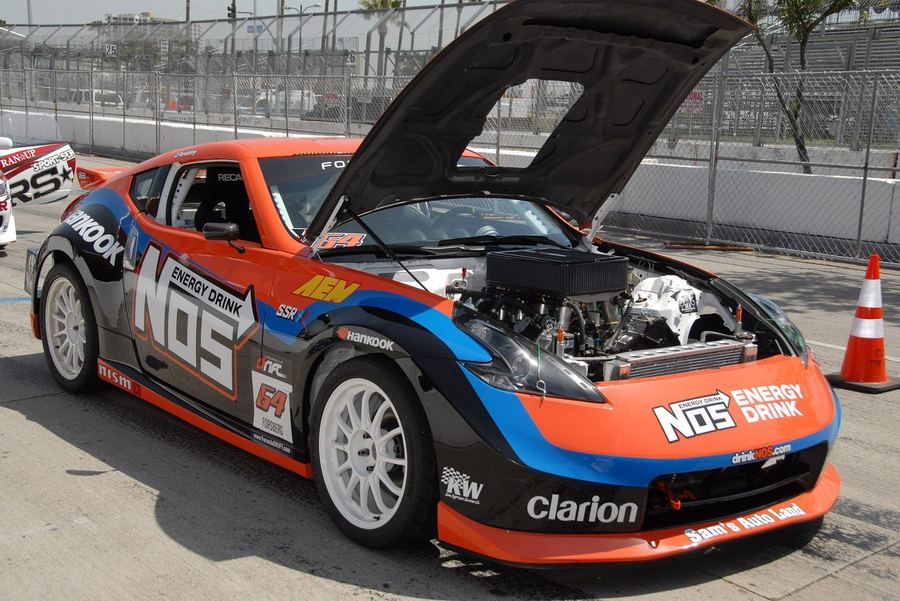
| Nissan 350Z/370Z (Z33/Z34) | 2002–2020 | 3.5–3.7L V6 | A modern, more powerful step up once fundamentals are solid — heavier than the classics but far newer to buy |
| Toyota GR86 / Subaru BRZ | 2012–present | 2.0–2.4L flat-4 | Today's most common new-car entry point — lightweight, RWD from the factory, and increasingly used in grassroots and pro-am competition |
The differential
An open differential sends torque to whichever wheel has least grip, so the inside rear spins up and the slide collapses. That makes an open diff essentially unusable for drifting. A limited-slip differential works, but its behaviour changes as it heats and wears, which makes it less predictable.
Competition cars therefore use a fully locked differential, either a purpose-built spool or a welded standard unit. It makes low-speed manoeuvring awkward and adds transmission wear, but the payoff is that the rear axle behaves exactly the same way every time.
The classic drift chassis
The cars the sport was built on share a profile: rear-wheel drive, roughly balanced, mechanically simple and cheap. Japanese coupés and saloons from the 1980s and 1990s dominate for that reason, and remain the standard grassroots choice worldwide.
Their advantage now is ecosystem as much as engineering. Decades of drifting has produced abundant knowledge, parts availability and proven setups for these chassis, so a newcomer can follow a well-documented path rather than developing one. See our guide to getting started for realistic first-car budgets.
Modern and professional choices
At professional level the choice is different, because the car is effectively purpose-built. Modern competition entries are commonly based on contemporary coupés and saloons but with tube-frame construction, sequential gearboxes, extreme steering geometry and aerodynamic packages closer to circuit racing.
The visible bodyshell is often the smallest part of what the car is. Two entries sharing a model name may have very little mechanically in common, which is why professional drifting is best understood as a bespoke-chassis category rather than a modified-production one.
Engines and swaps
Engine swaps are routine, and mostly driven by torque delivery rather than headline power. Drifting needs power available continuously across a wide rev range to sustain wheelspin through a long corner — a peaky engine that makes its power in a narrow band is harder to drive smoothly.
This is why large-capacity naturally aspirated engines and strongly turbocharged units are both popular: both can deliver sustained drive. Cooling capacity matters more than in most disciplines, because the car spends long periods at high revs and low road speed with limited airflow.
What to avoid as a first car
Avoid front-wheel drive entirely — it cannot drift in any meaningful sense. Avoid automatic gearboxes, which remove the clutch control that initiation depends on. Avoid anything expensive, rare or that you would be upset to damage, because contact is a normal part of learning.
Also be wary of starting with very high power. It masks technique rather than teaching it, and makes every mistake happen faster. Most experienced drivers recommend learning car placement and consistency in a modest car, then adding power once the fundamentals are genuinely solid — see our physics of why sliding costs grip for the underlying reason technique beats power.
Frequently asked questions
What makes a car good for drifting?
Rear-wheel drive, a manual gearbox, a locked differential, balanced weight distribution and as much steering angle as the geometry allows. Power is far less important than these.
Can front-wheel-drive cars drift?
Not meaningfully. Sustained drifting relies on driving the rear wheels to maintain the slide, which a front-wheel-drive layout cannot do.
Do you need a welded differential to drift?
You need a locked or limited-slip differential. An open differential sends torque to the spinning inside wheel and the slide collapses. Competition cars use a fully locked unit for predictability.
How much power do you need to drift?
Far less than most people assume. Modest power is an advantage while learning, and technique matters more. Professional cars use very high outputs to sustain slides through long corners, not because it is a prerequisite.
Why do drift cars have so much steering angle?
In a big slide the front wheels must point well into the corner to keep the car moving forwards. Stock cars max out around 30–40°; angle kits push that to 55–70°, and professional cars run 70–90°+. Run out of lock and the car spins.
Are automatic cars any good for drifting?
They are a poor choice. Clutch control is central to initiating and adjusting a drift, and automatics remove it.
What is the cheapest way into a drift car?
An older rear-wheel-drive coupé or saloon with a manual gearbox, then a welded differential and a bucket seat. Buy something you are willing to damage.
What is the most popular drift chassis in the world?
The Nissan Silvia (S13/S14/S15) is the most common grassroots chassis worldwide, thanks to near-perfect weight balance, a simple RWD layout and enormous aftermarket support.
What car did Keiichi Tsuchiya drift in Pluspy?
A Toyota Corolla Levin/Trueno (AE86) — the chassis widely considered the sport's original icon.
Is the Toyota GR86 or Subaru BRZ good for drifting?
Yes — it's become one of the most common modern entry points, being lightweight and rear-wheel drive from the factory, and it now shows up in grassroots and pro-am competition.
Why do professional drift cars share so little with the road car they're based on?
Because they're effectively purpose-built: tube-frame construction, sequential gearboxes, extreme steering geometry and aero. The bodyshell is often the smallest part of what the car actually is.
Why do drift cars run naturally aspirated V8s or big turbos instead of small engines?
Drifting needs power available continuously across a wide rev range to sustain wheelspin through a long corner — both large-capacity NA engines and strong turbo setups deliver that; a peaky small engine doesn't.
Sources

Priya covers endurance racing, NASCAR and drifting for CNMOTOS, drawn to disciplines that reward either sustained consistency over 24 hours or outright commitment in a single tandem battle.
View all articles by Priya Shah →