What it actually takes
Drifting is unusually accessible for a motorsport. You do not need a race licence to attend most practice days, the entry-level car costs less than a season of almost any circuit series, and the skill is learnable in a car park at low speed before it is ever attempted at pace.
What it does demand is repetition. Sustained drifting is a coordination skill, and there is no substitute for time. Most drivers spend a considerable number of practice days before they are consistent enough to compete without embarrassment.
The roadmap, stage by stage
Step through the five stages below in order — skipping ahead (buying power before you can hold a slide, or entering competition before you're consistent in practice) is the single most common way people waste money and plateau.
Getting Into Drifting: The Real Roadmap
Five stages, in the order that actually works, with honest cost ranges for each. Step through them below.
Start on a skid pan, not a mountain road
The correct first step is a skid pan or an open, sealed area at an organised drift day. Space is what makes learning safe: a wide surface with nothing to hit lets you explore losing and regaining traction without consequence.
Public roads are the wrong place, and not only legally. Drifting on a road means low grip margins, oncoming traffic and immovable objects at the exact moment a novice is least in control. Every reputable driver in the sport will tell you the same thing — see our history of drifting for how the sport itself only became legitimate once it moved off public touge roads and onto sanctioned events.
Choosing a first car
The requirements are simple: rear-wheel drive, a manual gearbox, and mechanical simplicity so repairs are cheap and quick. Power is not the priority — learning car control in a modestly powered car is easier and builds better habits than starting with something that breaks traction on demand.
The classic choices are older rear-wheel-drive coupés and saloons, precisely because they are cheap, plentiful and easy to work on. Buy something you will not be upset about damaging, because you will damage it. Our guide to drift-ready chassis covers the specific platforms worth looking for.
The modifications that actually matter first
The single most useful early modification is a welded or locked differential, which makes the rear axle behave predictably in a slide. After that, a hydraulic handbrake and a bucket seat with a harness do more for your progress than power ever will.
Increased steering angle helps later, once you are holding drifts long enough to need it. Big power upgrades should come last: adding horsepower to a car you cannot yet control simply makes the mistakes faster.
Safety kit and licensing
A helmet to a current motorsport standard is the minimum, and most organisers require it. Beyond that, a proper seat, harness and a fire extinguisher are the sensible next purchases, and a roll cage becomes mandatory in most competition classes.
Practice days generally require no competition licence. Entering a sanctioned championship usually does — the requirements vary by country and series, so check the specific series regulations rather than assuming.
How to practise effectively
Work in order. Learn to initiate a slide reliably, then to hold it at a steady angle, then to link corners with a transition, and only then to place the car accurately near clipping points. Skipping ahead is the most common way people plateau.
Practise with someone experienced watching if you can. Drifting has a large gap between what a driver thinks the car is doing and what it visibly does, and an outside observer or a camera closes that gap faster than seat time alone. Once you're consistent, it's worth understanding exactly how a run gets scored — including the 2026 telemetry system — so you're practising toward what actually earns points.
Entering your first competition
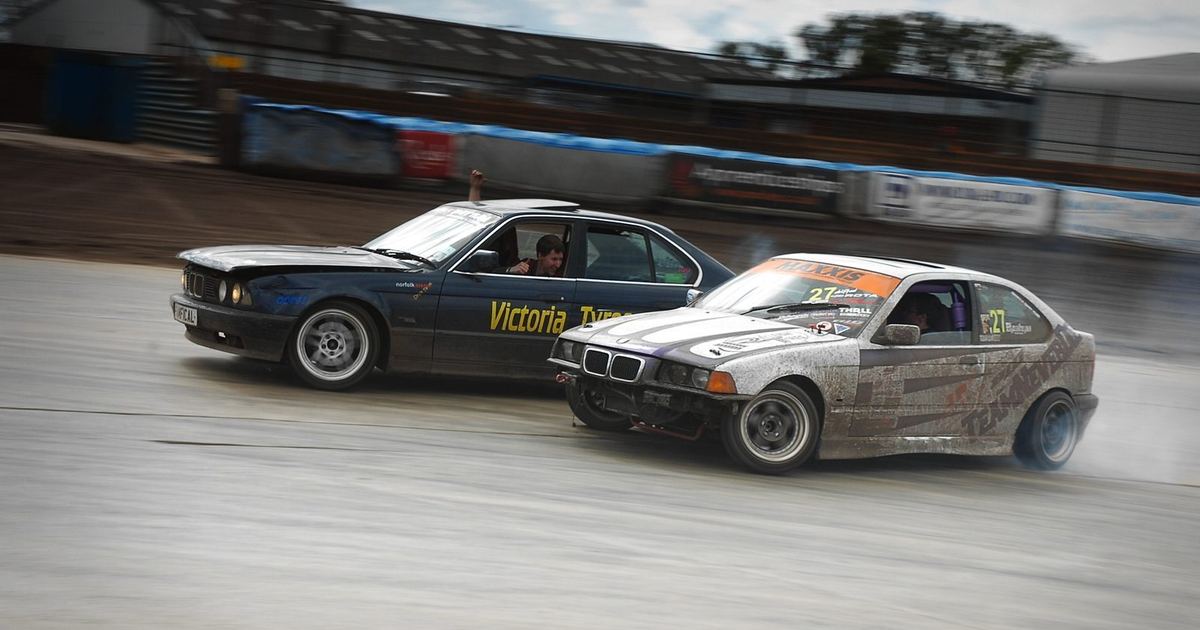
Most countries have grassroots or club-level series designed for exactly this. Entry requirements are modest, the fields are mixed in ability, and the format mirrors professional events: solo qualifying runs scored by judges, then tandem elimination brackets.
Expect the first event to be about finishing runs cleanly rather than winning. Competition adds pressure, unfamiliar course layouts and a queue of people watching, all of which make a driver who is consistent in practice noticeably less consistent on their first competitive weekend.
What it really costs
The honest answer is that the car is the cheap part and the tyres are not. Rear tyres are consumed deliberately and continuously — a popular 200-treadwear drift tyre runs around $200 new, cheaper 100TW options closer to $180, and a dedicated practice day for a learning driver can burn through two or three full sets. Budget for tyres as a recurring cost rather than a one-off, and buy used or part-worn while learning.
Add it all up — car, safety kit, a locked diff, tyres, fuel and entry fees — and a realistic first year lands around $6,000 for most new drifters, settling to roughly $3,500 a year after that at a once-a-month practice cadence. Drifting stays affordable relative to circuit racing mainly because you are not paying for a competition licence, a transporter and a professional engineer.
Frequently asked questions
Do I need a licence to start drifting?
Not for most practice days, which generally require only a road licence and a helmet. Entering a sanctioned championship usually requires a competition licence — check the specific series.
What is the best beginner drift car?
Any cheap, mechanically simple rear-wheel-drive car with a manual gearbox. Modest power is an advantage while learning, and you should expect to damage whatever you buy.
What is the first modification I should make?
A welded or locked differential. It makes the rear axle predictable in a slide and does more for your learning than any power upgrade.
Can I learn to drift on public roads?
No. It is illegal and genuinely dangerous — low margins, oncoming traffic and solid objects exactly when a beginner has least control. Use an organised skid pan or drift day.
How long does it take to learn?
Basic initiation and holding a slide come within a few practice days for most people. Consistent, accurate competition-standard runs take considerably longer, and are mostly a function of seat time.
How many tyres will I use?
More than you expect. A learning driver can burn through two or three full sets in a single practice day, and rear tyres are destroyed by design.
Is drifting expensive?
It is among the cheapest motorsports to start. A realistic first year — car, safety kit, tyres and entry fees — runs around $6,000 for most people, settling to roughly $3,500/year after that at a monthly cadence.
What should my first modification budget look like?
Expect roughly $800–2,000 for a welded or locked differential, a hydraulic handbrake, and a proper seat and harness — before spending anything on power.
Should I buy a fast car to start drifting?
No. A car with more power than you can control just makes mistakes happen faster. Learn car control in something modestly powered first, and add power last.
How much does a beginner drift car cost?
Typically a few thousand dollars for an older, mechanically simple rear-wheel-drive coupé or saloon — the classic choices are cheap precisely because they're common and easy to work on.
What safety gear is mandatory?
A motorsport-standard helmet is the baseline most organisers require. A proper seat, harness and fire extinguisher come next, and a roll cage becomes mandatory in most competition classes.
What's the most common mistake beginners make?
Skipping stages — buying power before mastering initiation, or entering competition before being consistent in practice. Working through car control, then holding angle, then transitions, then accuracy, in that order, is what actually builds skill.
Sources

Priya covers endurance racing, NASCAR and drifting for CNMOTOS, drawn to disciplines that reward either sustained consistency over 24 hours or outright commitment in a single tandem battle.
View all articles by Priya Shah →