
Judged, not timed
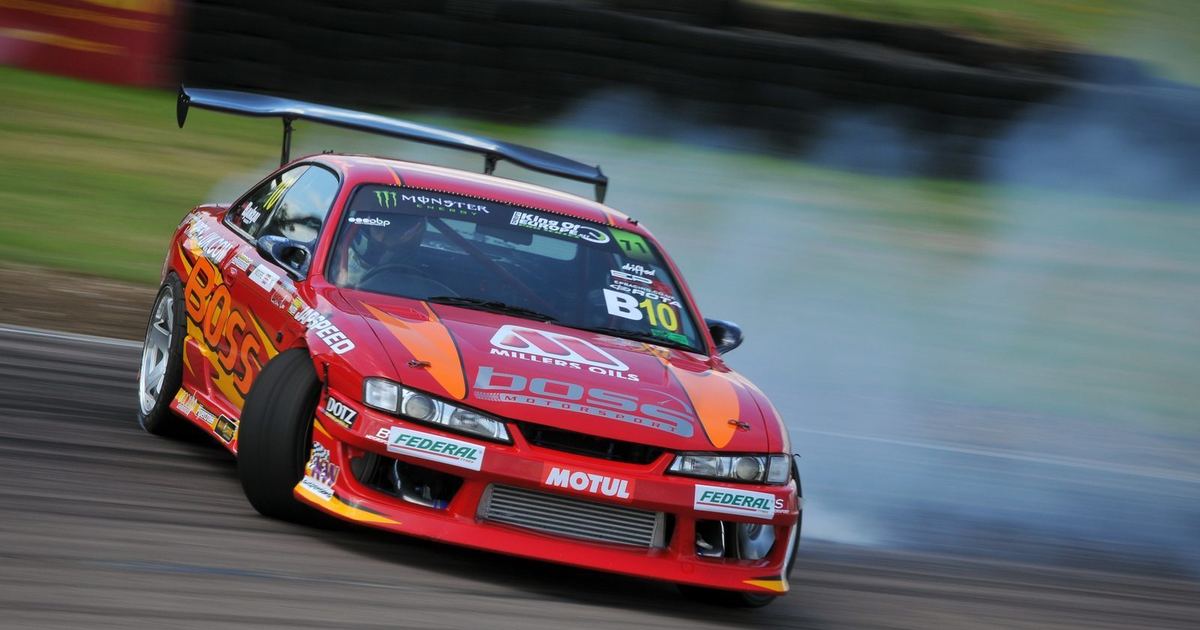
Drifting is the only major motorsport discipline where nobody wins by crossing a line first. There is no lap time to beat and no chequered flag to reach. Instead, officials watch each run and score it against published criteria, which makes drifting closer in structure to gymnastics or freestyle skiing than to circuit racing.
That scoring rests on three things: line, angle and style. Most professional series weight them roughly evenly, and a driver has to deliver all three in the same run. Being spectacular in one while failing another is how strong-looking runs end up with mediocre scores.
Line: the path the car must take
Before competition begins, judges walk the course and define the line they want to see — which parts of the track the car should reach, and where it should be at each point. That line is then communicated to drivers in a briefing, so everyone is attempting the same thing.
Line is usually the most heavily penalised criterion, because it is the most objective. A car that fails to reach a required part of the course has not done the task, however impressive it looked doing something else. This is why a wild, smoky run can score below a tidier one that actually hit every mark.
Angle: how far sideways
Angle measures how far the car is rotated relative to its direction of travel. More angle is generally better, because holding a large angle at speed is harder and closer to the limit of control — but only while the car is still following the required line.
The judging nuance is that angle must be appropriate to the section. Maximum angle everywhere is not the goal; the goal is the angle the course demands, held consistently. A driver who over-rotates and has to correct mid-corner loses more than they gained.
Style: commitment and fluidity
Style is the most subjective criterion and the one newcomers find hardest to read. It covers how committed the entry looks, how smoothly transitions are linked, whether the car is settled or being constantly corrected, and how confidently the driver approaches walls and clipping points.
In practice, judges are assessing whether the run looks controlled and deliberate rather than lucky. A driver who initiates early, aggressively and cleanly, then flows through the course without visible corrections, scores well. Hesitation, a straightened moment or an obvious save all cost points here.
Clipping points and outer zones
Courses are marked with two kinds of target. Clipping points are cones or markers the car should pass as closely as possible — judges assess proximity, and centimetres matter. Outer zones are areas the car must reach with its outside wheels, usually pushing the driver right out towards a wall.
Together these define the line concretely enough to be scored consistently. Missing an outer zone is a serious deduction because it means the car took an easier path than the one set. Clipping points are more granular: getting within a few centimetres scores meaningfully better than passing a metre away.
How qualifying runs are scored
Competition normally opens with solo qualifying. Each driver gets two runs, and the better of the two counts. Judges award a score out of 100, combining line, angle and style, and the field is ranked on that number.
Qualifying position matters more than it might appear, because it seeds the elimination bracket. A high qualifying score means facing lower-ranked opposition in the early rounds, while a mistake in qualifying can put a genuinely quick driver against a title contender immediately.
How tandem battles are decided
The elimination rounds are run as tandem battles: two cars on track together, one leading and one chasing. The lead driver sets the pace and must deliver their own strong run. The chase driver must mirror the lead car as closely as possible while maintaining their own drift — matching angle and transitions, staying near, but not hitting.
Each pairing runs twice, swapping roles, and judges then decide which driver did the better job across both. If the two runs are genuinely inseparable, most series call a One More Time rerun rather than split the difference. That is why tandem battles occasionally run three or four times before a winner emerges.
What loses a run outright
Some errors end a run's score immediately rather than merely reducing it. Straightening the car — losing the drift entirely — is the clearest: from that point the run is no longer being scored as a drift. Spinning has the same effect. So does going off course or dropping wheels beyond the track limits.
In tandem, causing contact that puts the other car out is generally penalised against the driver responsible, and a chase driver who cannot stay with the lead car simply loses on proximity. There is no equivalent of a lucky finish; every one of these is visible to the judges in real time.
Why consistency beats spectacle
The structural reason consistency wins is that a driver has to produce good runs repeatedly to survive a bracket — through qualifying, then two runs per battle, potentially five or six times in a day, sometimes in changing weather and always on tyres that are degrading.
A driver capable of a spectacular one-off run but not of repeating it will eventually meet an opponent who simply does the same solid thing twice. That is why the drivers who win championships are rarely the wildest on any single run, and why judged scoring rewards repeatability far more than most spectators expect.
Frequently asked questions
How is drifting scored?
On three criteria: line (whether the car follows the required path), angle (how far sideways it is held) and style (how committed and fluid the run looks). Most series weight them roughly equally and award a score out of 100.
What is a clipping point in drifting?
A cone or marker the car should pass as closely as possible. Judges assess proximity, and a few centimetres of difference meaningfully changes the score.
What is an outer zone?
A marked area the car must reach with its outside wheels, usually close to a wall. Missing it is a heavy deduction because it means the driver took an easier line than the one set.
How does a tandem battle work?
Two cars run together, one leading and one chasing, then they swap roles and run again. Judges compare both runs and pick a winner. If the runs are inseparable, most series order a rerun known as One More Time.
What automatically ruins a drift run?
Straightening the car, spinning, going off course or dropping wheels outside track limits. Each of these ends the run's scoring rather than simply reducing it.
Is drifting subjective?
Partly. Line is close to objective because the course targets are fixed and visible, angle is measurable by eye, and style is the genuinely subjective part. Published criteria and multiple judges exist to keep it consistent.
Do drivers get more than one run?
In qualifying, yes — normally two, with the better score counting. In tandem elimination, each pairing runs twice so both drivers lead once and chase once.

Priya covers endurance racing, NASCAR and drifting for CNMOTOS, drawn to disciplines that reward either sustained consistency over 24 hours or outright commitment in a single tandem battle.
View all articles by Priya Shah →

.jpg)