Aeroscreen
A windscreen-style canopy fitted over the cockpit to protect a driver's head from debris and impacts. It is IndyCar's equivalent of the halo device used in Formula 1, though structurally different — a titanium frame supporting a ballistic-resistant polycarbonate screen, rather than an open bar structure.
It was introduced following a series of serious head-injury incidents and now sits over every car on the grid, regardless of circuit type.
Push-to-Pass
A driver-activated system that adds roughly 60 extra horsepower for a limited, budgeted amount of time per race. It is only used on road and street courses, not ovals, and managing the fixed allocation across a race is a genuine strategic skill.
Read our full explainer on push-to-pass for the exact time budgets and how the rules have changed.
Pit Window
The range of laps within which a team can reasonably make a pit stop given fuel range and tire wear, without running out of fuel or losing excessive time on worn tires before the stop.
Strategy often revolves around choosing exactly when within that window to pit — early to react to a caution period, or late to gain a fresher-tire advantage right before the end of a stint.
Caution Period and Yellow Flag
A caution period is called when an incident — a crash, debris, or standing water — makes racing unsafe at full speed. Cars slow to a controlled pace behind a pace car, and the field typically bunches back up.
Cautions are pivotal to IndyCar strategy: teams frequently pit during a caution period because the cost of a stop, measured in lost track position, is much lower when the whole field is running slowly anyway.
Double-File Restart
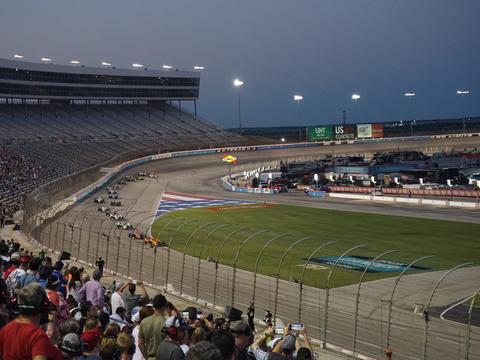
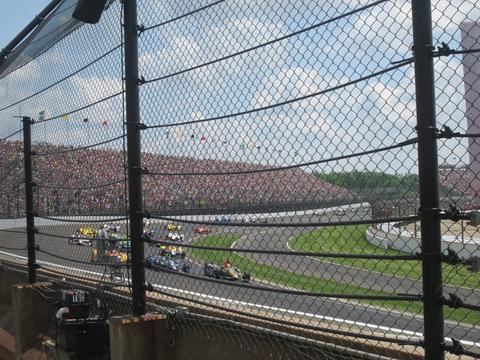
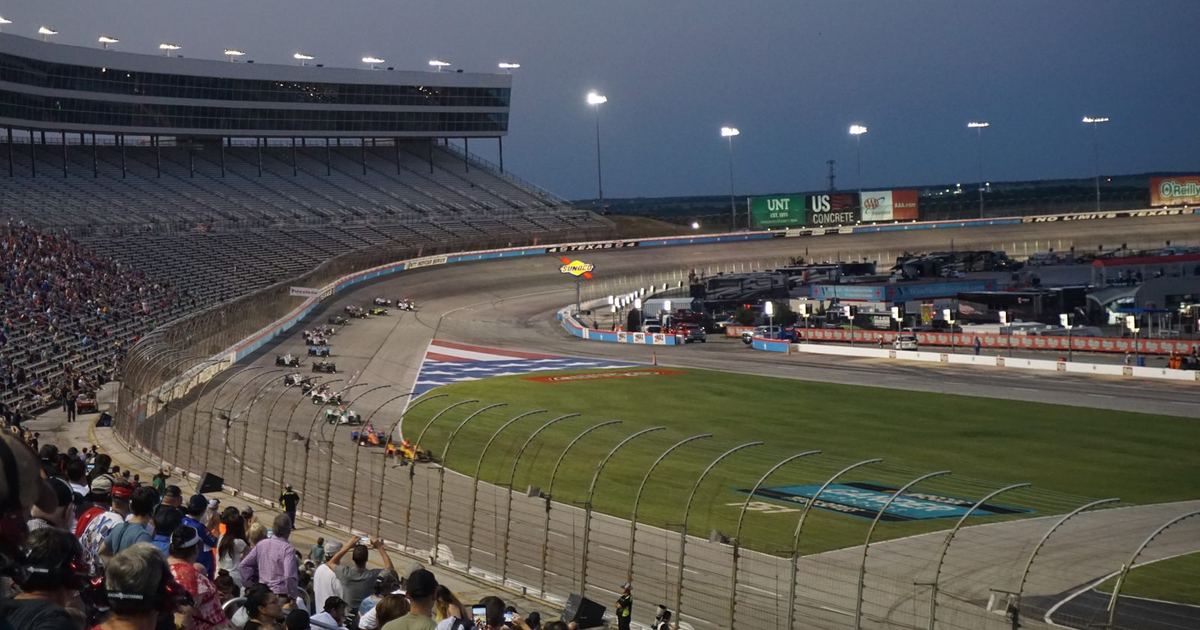
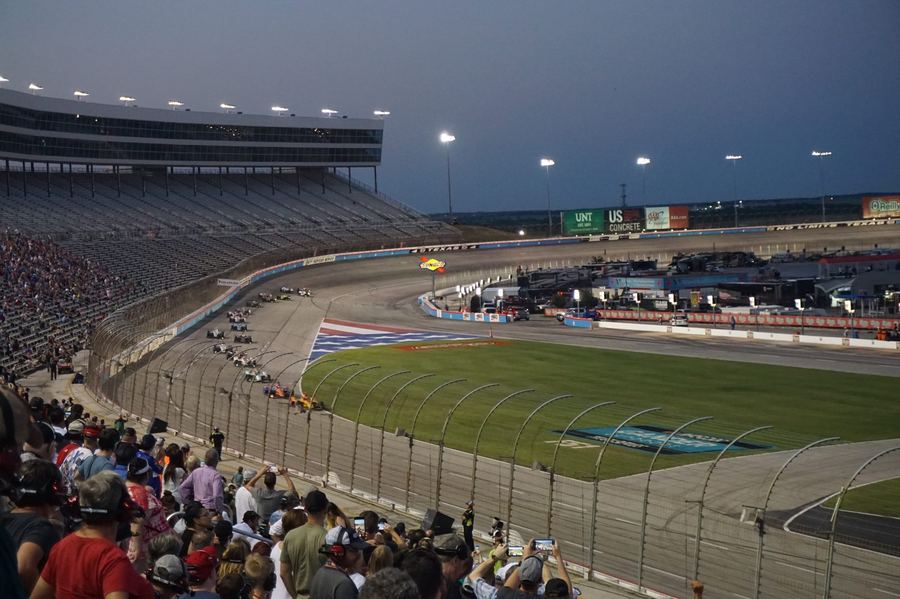
When racing resumes after a caution period, cars restart in two side-by-side rows rather than a single file, which produces close, contested restarts and is frequently where overtaking on ovals is concentrated.
Restarts are a common flashpoint for incidents precisely because cars are close together and the field is accelerating simultaneously from a relatively low speed.
Spec Chassis
Every team races an identical Dallara chassis rather than a car of its own design. Teams differentiate themselves through their choice between two approved engine suppliers, setup work, strategy and driving rather than through unique aerodynamic or structural design.
This is the single biggest structural difference between IndyCar and development-based series such as Formula 1, and it is the main reason IndyCar's grids tend to be so tightly matched on raw pace.
Frequently asked questions
What is an aeroscreen in IndyCar?
A windscreen-style canopy made of a titanium frame and ballistic-resistant polycarbonate that protects a driver's head from debris. It is IndyCar's equivalent of Formula 1's halo device.
What does pit window mean in IndyCar?
The range of laps during which a team can reasonably make a pit stop given fuel range and tire wear, without running out of fuel or racing too long on worn tires beforehand.
What is a caution period?
A period where cars slow to a controlled pace behind a pace car because an incident has made full-speed racing unsafe. Teams frequently use cautions to pit at a lower strategic cost.
What is a double-file restart?
A restart after a caution period where cars line up two-by-two rather than in a single file, producing close, contested restarts that are a common site of overtaking and incidents.
What does spec chassis mean?
Every IndyCar team races an identical Dallara chassis. Teams differentiate through engine supplier choice, setup, strategy and driving rather than unique car design.
Is the aeroscreen the same as F1's halo?
They serve the same purpose — protecting a driver's head in an open cockpit — but are structurally different. The aeroscreen is a full transparent screen on a titanium frame, while the halo is an open bar structure.
What is push-to-pass in one sentence?
A driver-activated system adding roughly 60 horsepower for a limited, budgeted time per race, used only on road and street courses.

Pippa has followed open-wheel racing for 12 years, from Formula 1's turbo-hybrid era to IndyCar's short ovals, and has watched competitive sim racing grow from a niche hobby into a genuine motorsport discipline in its own right. She covers circuit and open-wheel racing, touring cars and esports for CNMOTOS.
View all articles by Pippa Cook →