
Supercars
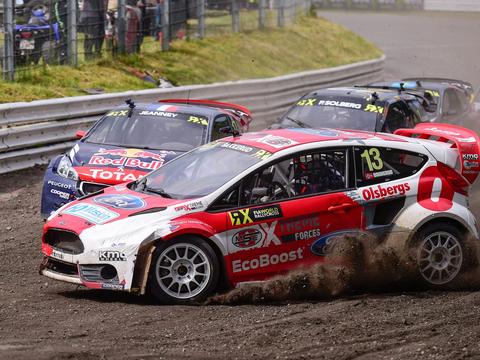
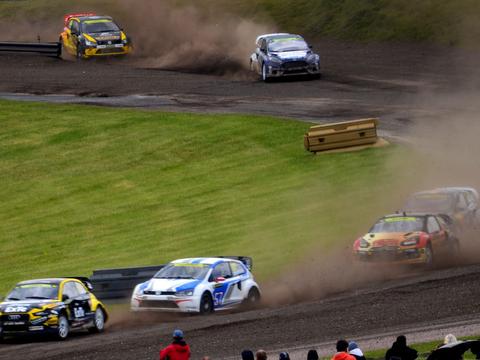
The top technical class in FIA World Rallycross, referring to extremely powerful, purpose-built rallycross machinery with enormous power-to-weight ratios, distinct from — and considerably more powerful than — most rally cars they distantly resemble in silhouette.
Despite the name, these are single-seater-adjacent competition machines built specifically for short-circuit rallycross racing, not road-legal supercars.
Joker Lap
A mandatory, slightly longer alternative section of the circuit that every driver must take exactly once per race. Missing it results in disqualification, and its timing is one of the central tactical decisions in the sport.
Read our full explainer on the Joker Lap for how the timing decision actually works.
Heats, Semi-Finals and Finals
The progression structure of a rallycross event day: drivers first compete in qualifying heats, with the strongest performers advancing through semi-finals into a final. Points are typically awarded throughout this whole progression.
This structure means a rallycross event, unlike a single-race format, rewards consistency across multiple short races rather than performance in one race alone.
Standing Start
A race start where all cars begin from a complete stop rather than a rolling start, common in rallycross and central to why the opening seconds of a race are so disproportionately important — reaction time and launch quality directly affect the crucial first-corner positioning.
It contrasts with the rolling starts used in some other motorsport disciplines, where cars are already moving at the moment the race officially begins.
RX1e
An electric rallycross car class explored as part of the sport's broader move toward electrification, reflecting rallycross's short, contained race format making it a genuinely suitable early testbed for competitive electric racing technology.
It exists alongside combustion-powered Supercars rather than having fully replaced them, as the championship continues evaluating electric racing's role in the sport.
Mixed Surface
The defining characteristic of a rallycross circuit: a single lap crossing between tarmac and loose gravel sections, forcing a car and setup to handle both surfaces simultaneously rather than specializing in one, unlike WRC events which specialize by surface for an entire rally.
This constant surface change is a large part of why rallycross driving and setup differ so much from other rally-derived disciplines.
Frequently asked questions
What are Supercars in rallycross?
The top technical class in FIA World Rallycross — extremely powerful, purpose-built rallycross machinery with enormous power-to-weight ratios, not road-legal supercars despite the name.
What does standing start mean in rallycross?
A race start where all cars begin from a complete stop rather than already moving, making launch quality and reaction time critically important to first-corner positioning.
What is RX1e?
An electric rallycross car class explored as part of the sport's move toward electrification, existing alongside combustion-powered Supercars rather than replacing them entirely.
What does mixed surface mean in rallycross?
A single circuit lap that crosses between tarmac and loose gravel sections within the same lap, forcing cars to handle both surfaces at once rather than specializing in one as WRC events do.
What is the difference between a heat, a semi-final and a final in rallycross?
Heats are the initial qualifying races, with the strongest performers advancing through semi-finals into the final. Points are typically awarded throughout this whole progression, not just in the final.
Why does rallycross use a standing start?
It is the traditional format for the discipline and directly contributes to the sport's chaotic, close first-corner racing, since all cars accelerate from a complete stop simultaneously.
Are rallycross Supercars the same as rally cars?
They share rally-derived heritage and all-wheel-drive layouts, but Supercars are considerably more powerful and purpose-built specifically for short-circuit rallycross racing rather than multi-day rally stages.

Maya grew up watching rally stages and motocross before following both sports closely as an adult, and covers the off-road side of motorsport for CNMOTOS — from World Rally Championship gravel stages to Supercross stadiums and grassroots karting.
View all articles by Maya Torres →