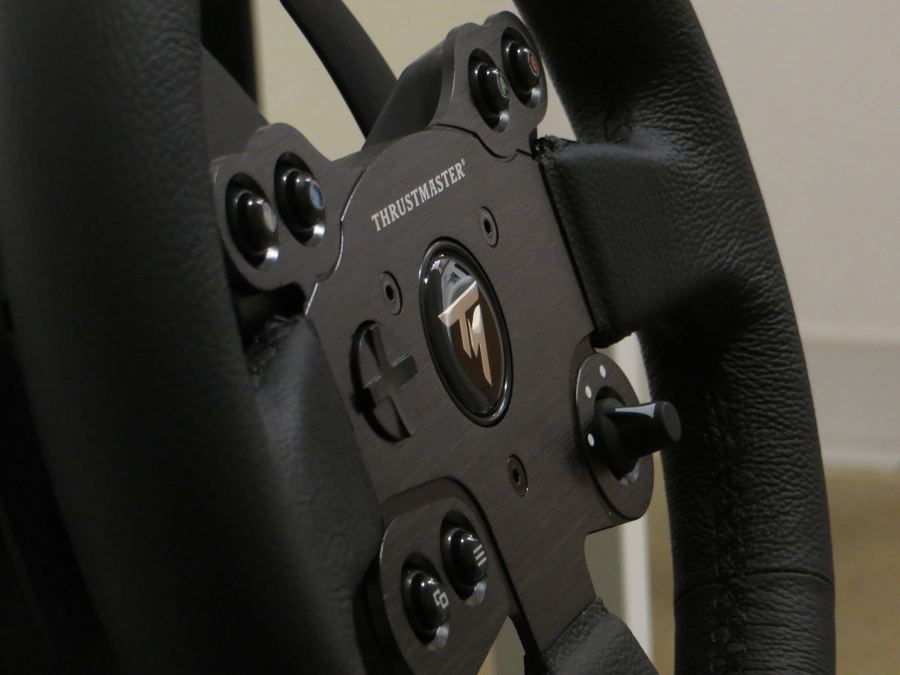
Direct-Drive Wheelbase
A steering wheel system where the motor connects directly to the wheel shaft with no belts or gears in between, producing stronger, more detailed and lower-latency force feedback than entry-level belt or gear-driven wheels.
It is generally considered a meaningful upgrade for a driver who already has solid fundamentals — a rigid mount, good pedals and a secure seating position — rather than a good starting purchase.
Load-Cell Pedal
A brake pedal that measures the actual force applied by the driver's foot, rather than simply how far the pedal has traveled, closely mimicking how a real car's hydraulic brake system behaves.
This is widely considered one of the highest-value individual hardware upgrades available, since brake feel and consistency directly affect lap time and consistency more than almost any other single component.
Safety Rating
A numeric measure of how cleanly a driver races, calculated from incident points relative to corners completed. It is tracked separately from raw speed and separately across different racing disciplines.
Read our full explainer on Safety Rating for how incidents are scored and how license class promotion and demotion work.
iRating and Similar Skill Ratings
A numeric skill rating, distinct from Safety Rating, that estimates a driver's competitive pace relative to others, used by some platforms to help match drivers of similar speed into the same competitive splits.
Skill rating and Safety Rating serve different purposes — one estimates how fast a driver is, the other how cleanly they race — and a driver can be strong in one while still developing in the other.
Splits
When too many drivers sign up for the same race session to fit in one race, the field is divided into multiple separate, simultaneous races called splits, typically grouped by skill rating so similarly paced drivers race together.
A driver's result only counts against others in their own split, which is why finishing position alone does not always indicate the strength of competition without knowing which split a result came from.
Fixed Setup
A race format where every competitor uses an identical, unchangeable car setup rather than being allowed to adjust suspension, gearing and other parameters themselves.
Fixed setup racing removes setup engineering as a competitive factor, isolating driving skill and racecraft more directly, and is commonly used in entry-level and officially sanctioned esports series for exactly that reason.
Frequently asked questions
What is a load-cell pedal?
A brake pedal that measures the actual force applied rather than just travel distance, closely mimicking a real car's hydraulic brakes. It is considered one of the highest-value individual hardware upgrades in sim racing.
What does fixed setup mean in sim racing?
A race format where every competitor uses an identical, unchangeable car setup, removing setup engineering as a factor and isolating driving skill and racecraft more directly.
What are splits in sim racing?
When too many drivers sign up for one race session, the field is divided into multiple simultaneous races called splits, typically grouped by skill rating so similarly paced drivers race together.
What is the difference between iRating and Safety Rating?
iRating and similar skill ratings estimate how fast a driver is relative to others, while Safety Rating measures how cleanly they race. They are tracked separately and serve different purposes.
What is a direct-drive wheelbase?
A steering wheel system where the motor connects directly to the wheel shaft with no belts or gears, producing stronger and more detailed force feedback than entry-level wheels.
Why do sim racing platforms use fixed setups for beginners?
To remove setup engineering as a competitive variable, so entry-level and officially sanctioned esports races are decided more directly by driving skill and racecraft.
Do I need a load-cell pedal to start sim racing?
No, though it is a genuinely high-value upgrade once you have the basics — a rigid mount, a decent wheel and pedal set, and a secure seating position — already in place.

Pippa has followed open-wheel racing for 12 years, from Formula 1's turbo-hybrid era to IndyCar's short ovals, and has watched competitive sim racing grow from a niche hobby into a genuine motorsport discipline in its own right. She covers circuit and open-wheel racing, touring cars and esports for CNMOTOS.
View all articles by Pippa Cook →