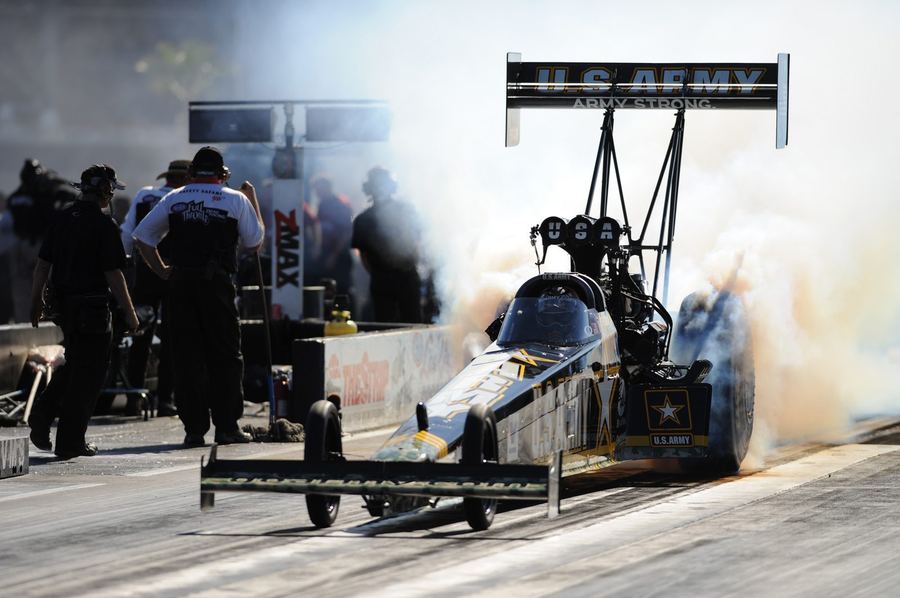
Qualifying Sets the Entire Bracket
Before elimination racing begins, drivers complete multiple qualifying sessions, typically four, held across the two days before eliminations, with each driver's best elapsed time from those sessions determining their qualifying position. The quickest elapsed time earns the number one qualifying position and, with it, a genuine strategic advantage: lane choice.
This qualifying phase matters enormously, since it does not just set a starting order the way qualifying does in most motorsport — it directly determines the entire elimination bracket a driver will face.
How the Ladder Is Seeded
A typical professional class runs a 16-car elimination field, seeded so the top qualifier faces the sixteenth, the second-place qualifier faces the fifteenth, and so on down the ladder — a standard sportsman-style bracket pairing the strongest half against the weakest half.
This seeding rewards strong qualifying directly: the higher a driver qualifies, the theoretically weaker their first-round opponent, all the way until the field narrows and remaining opponents are, by definition, the ones who have already beaten someone else.
Single Elimination: Lose Once, You're Out
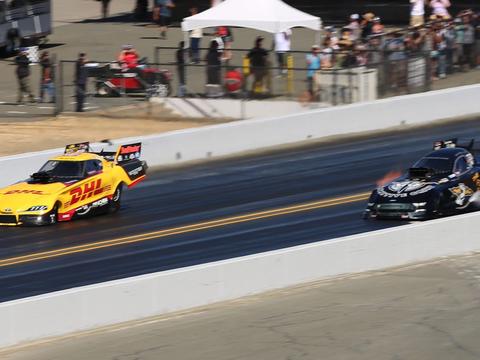
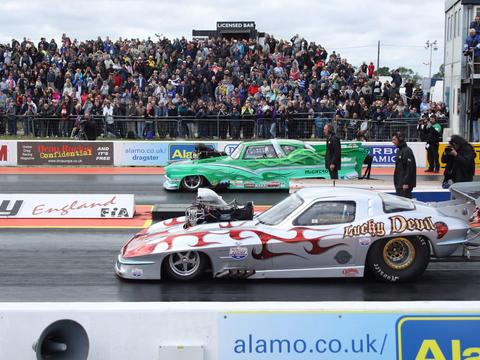
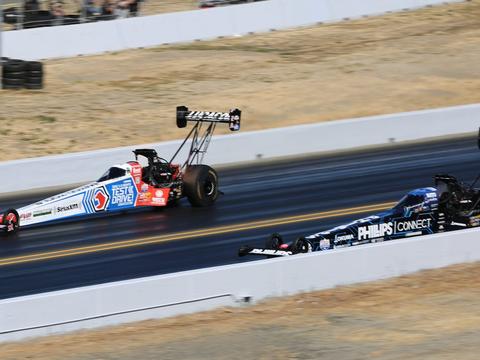
Once the ladder is set, every round is single elimination — heads-up racing where the first car to cross the finish line, or the opponent who commits a foul such as a red-light start, wins the round outright. There is no second chance within that event; a loss ends a driver's day.
This format puts enormous weight on every single run. A driver with the fastest car in the field can still be eliminated in the very first round by a slower car that simply reacts and executes better on that particular pass.
Why Reaction Time Dominates Elimination Rounds
Because eliminations are head-to-head rather than against the clock alone, reaction time off the start becomes even more decisive than in qualifying, where only raw elapsed time matters. A quicker reaction can let a genuinely slower car beat a faster one to the finish line.
This is precisely why professional drag racing places such enormous emphasis on start-line technique and consistency — in an elimination format, the driver who reacts better often wins regardless of which car was actually quicker over the full run.
Fouls and Red Lights End a Round Instantly
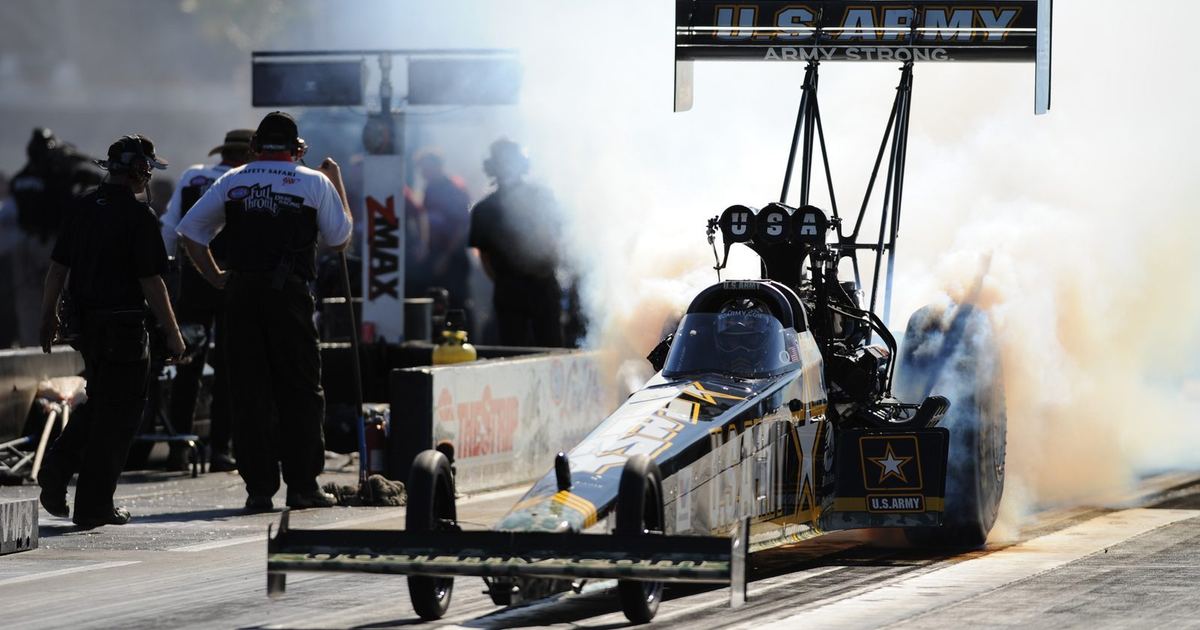
Committing a foul — most commonly a red-light start, leaving before the green light legally allows it — results in immediate disqualification from that round, regardless of how the rest of the run might have gone. It is one of the most unforgiving penalties in motorsport, with zero opportunity to recover within that pass.
This makes the balance between an aggressive, quick reaction and a genuinely safe, legal launch one of the most important skills a professional drag racer develops, since being too aggressive costs everything instantly.
Progressing Through the Bracket
Winners advance to face other winners in subsequent rounds, with the bracket narrowing from 16 to 8, to 4, to a final pairing, exactly as in any standard single-elimination tournament format used across many sports.
By the final round, a driver has beaten every other qualifier who advanced as far as they did, meaning the eventual event winner has genuinely proven themselves across multiple consecutive head-to-head rounds rather than a single qualifying effort.
Frequently asked questions
How many cars are in an NHRA elimination field?
A typical professional class runs a 16-car single-elimination field, seeded from qualifying results with the top qualifier facing the sixteenth-place qualifier, and so on.
What happens if you get a red light start in NHRA eliminations?
Immediate disqualification from that round, regardless of how the rest of the run might have gone. It is one of the most unforgiving penalties in the sport.
Does the fastest qualifier always win in NHRA eliminations?
Not necessarily. Because eliminations are head-to-head, a driver with the fastest car can still lose in the first round to a slower car that reacts and executes better on that specific pass.
How does NHRA qualifying determine the elimination ladder?
Each driver's best elapsed time across multiple qualifying sessions sets their position. The bracket is then seeded so the top qualifier faces the lowest-seeded qualifier, and so on down the ladder.
What is single elimination in drag racing?
A format where losing a single round ends a driver's event immediately — there is no second chance within that event once a driver loses a heads-up race.
Why does reaction time matter so much in elimination rounds?
Because eliminations are decided head-to-head rather than purely on elapsed time, a quicker reaction off the start can let a genuinely slower car beat a faster one to the finish line.
What advantage does the top qualifier get in NHRA eliminations?
Lane choice, along with facing the lowest-seeded qualifier in the field in the first round — a theoretically weaker first-round opponent as a reward for strong qualifying.

Jack has been a motorcycle racing enthusiast for as long as he can remember. For CNMOTOS, he covers everything from MotoGP and World Superbike to drag racing and the sport's more niche corners, like sidecar and three-wheel racing.
View all articles by Jack Korpela →