Production-Based vs Purpose-Built
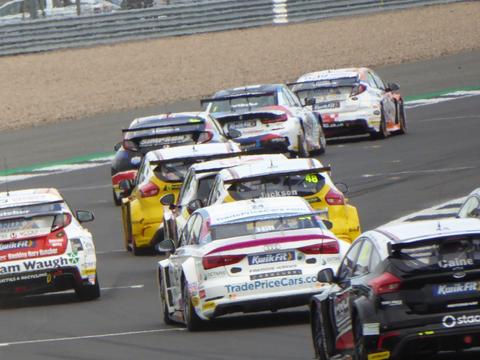
Touring cars are built from actual production models — a BTCC or TCR car starts life as a road-going hatchback or sedan before being heavily modified within a technical ruleset. NASCAR's Cup Series cars look production-based but are not: they run on a common, purpose-built racing platform, with bodywork styled to resemble road cars rather than derived from them.
That distinction matters more than it might seem. A touring car's underlying identity as a real, purchasable model is central to the category's appeal to manufacturers and fans; NASCAR's approach prioritizes tightly controlled, safe, closely matched racing machinery over any direct production-car link.
Ovals vs Road Courses
NASCAR's Cup Series is built primarily around oval racing, with a smaller number of road and street course events on the calendar. Touring car racing runs almost exclusively on road courses and does not typically race on ovals at all.
This shapes the driving skills each discipline rewards. NASCAR places heavy emphasis on drafting, aerodynamic tow and sustained high-speed pack racing, while touring cars reward braking precision and close-quarters positioning through varied corner types rather than sustained high-speed proximity.
How Each Series Keeps Racing Close
Touring cars use active, explicit equalizing systems — success ballast historically, now boost-allocation systems like the BTCC's TOCA Turbo Boost — tied directly to recent results or championship position. NASCAR relies more on strict technical regulation of a common car platform and stage-based points scoring to keep competition close, without an equivalent driver-facing boost or weight penalty system.
Both approaches share a goal — preventing any one team or manufacturer from running away with a season — but touring cars pursue it through a visible, actively managed mechanism, while NASCAR pursues it primarily through platform standardization.
Contact and Racing Etiquette
Both disciplines tolerate more physical contact than most other motorsport categories, but the context differs. Touring car contact typically happens at corner-entry braking zones and in tight midfield battles at moderate speed. NASCAR contact often happens at very high closing speeds within tightly packed groups, particularly on superspeedways, where the consequences of contact can be considerably more severe.
Stewards in both categories distinguish between racing incidents and deliberate contact, but the acceptable threshold and typical context for contact differ enough that a move considered normal in one series might draw a penalty in the other.
Race Weekend Structure
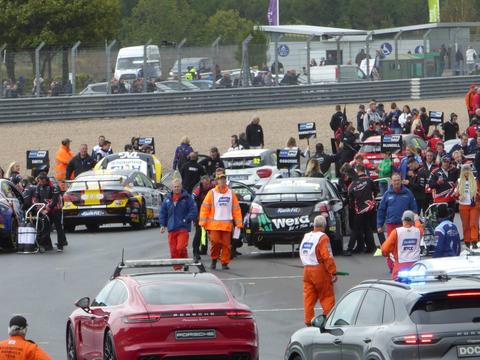
A BTCC weekend runs three separate races, each awarding full championship points, with partially reversed grids between them. NASCAR Cup Series events are typically a single race per weekend, though many races are divided into scored stages that award points partway through.
This means a single bad touring car race is one of three chances that weekend, while a single bad NASCAR race is the whole weekend's result — a meaningful difference in how much a single mistake or mechanical problem costs a driver.
Which Is More Accessible to a New Fan?
NASCAR's oval racing and single-race weekends are generally easier to follow initially — position changes are visible and continuous, and the outcome of a weekend is decided in one race. Touring car racing rewards a little more background knowledge: understanding why a leading car is carrying a boost disadvantage, or why the grid order changed for race three, adds meaningfully to the experience.
Neither is objectively better suited to newcomers; they simply ask a new viewer to focus on different things — sustained tension and strategy across a long single race in NASCAR's case, and rapid tactical racing repeated three times in an afternoon in touring cars' case.
Frequently asked questions
Are touring cars the same as NASCAR cars?
No. Touring cars are heavily modified versions of real production models. NASCAR Cup Series cars look production-based but run on a common, purpose-built racing platform not derived from a road car.
Does touring car racing use ovals like NASCAR?
No. Touring car racing runs almost exclusively on road courses, while NASCAR's Cup Series is built primarily around oval racing with a smaller number of road and street course events.
How many races happen in a touring car weekend compared to NASCAR?
A BTCC weekend typically runs three separate races, each scoring full championship points. NASCAR Cup Series weekends are typically a single race, sometimes divided into scored stages.
Which has more contact, touring cars or NASCAR?
Both tolerate significant contact, but in different contexts — touring car contact usually happens at moderate speed in braking zones, while NASCAR contact often happens at very high speed within tightly packed groups, particularly on superspeedways.
How do touring cars keep racing close compared to NASCAR?
Touring cars use active, visible equalizing systems tied to recent results, such as the BTCC's boost-allocation system. NASCAR relies more on strict standardization of a common car platform rather than an equivalent driver-facing system.
Is NASCAR easier to follow than touring car racing for a beginner?
Generally yes at first, since oval position changes are continuous and visible and a weekend's outcome is decided in one race. Touring car racing rewards understanding a bit more background, such as boost allocation and reversed grids.
Do touring cars and NASCAR share any technical rules?
No meaningful overlap. They are regulated by entirely separate governing bodies and technical rulesets suited to their different formats and objectives.

Pippa has followed open-wheel racing for 12 years, from Formula 1's turbo-hybrid era to IndyCar's short ovals, and has watched competitive sim racing grow from a niche hobby into a genuine motorsport discipline in its own right. She covers circuit and open-wheel racing, touring cars and esports for CNMOTOS.
View all articles by Pippa Cook →